NBAcentel
Member

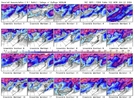
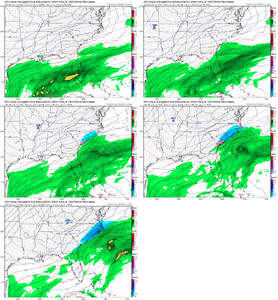
Need more like 5 for sure.A lot of happy folks with member 5
View attachment 141529
What exactly would have to happen to get that member 5? I’m sure some of you guys know exactly what would have to happen for that.A lot of happy folks with member 5
View attachment 141529
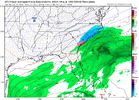
More importantly is the number of members showing something. 14/20 have at least some snow at my house….not bad 10 days outA lot of happy folks with member 5
View attachment 141529
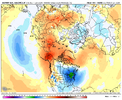
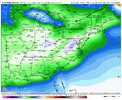
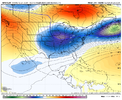
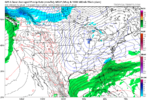
Holy shitballs I hope that’s right. Next 30 days 16 below average? No way we wouldn’t luck into a storm or two.
Even though we know that will never verify. I’d be interested to see some of the analogs for that. Those are some Jan/Feb 1977 type numbers
that would be one of the coldest 30 day stretches in recorded history !Holy shitballs I hope that’s right. Next 30 days 16 below average? No way we wouldn’t luck into a storm or two.
I think it's a computing power issue. It seems to take forever to get the operational output. If you took the operationals at their current resolution and reran them many times over, it would probably take a very long time. So what is done is that they rerun the operational at a lower resolution for the entirety of the time scale. Then they perturb the initial conditions as many times as a particular suite calls for (for the Euro, that would be 50 times - hence 50 individual ensemble members, based off of a control run with 50 slight initial condition variations).
I think we, in the weather forum and social media world, quite often see a failure to use the ensembles for the purpose for which they are intended. For instance, they could be used to validate 7-10 day pattern that might be conducive to a winter storm. Conversely, they are not intended to nail down the specifics of a 7-10 day snowstorm. They are also not intended to be used on an individual member basis. So, when you see a Euro operational model not showing a D7 threat but the Euro control is showing a D7 snowstorm, your point is quite valid: Why would we believe a control run with only one eye looking through a milk jug over an operational run with two eyes with scratched up glasses with the wrong prescription? Answer? We shouldn't. Is it fun to look at? Yes. Is it worth anything, not really (when used like that).
We could have a lengthy discussion about use cases for ensembles. But professionals generally use them to determine the uncertainty around short term specific events (storm formation, rainfall totals, etc.) and the validity of medium and longer range patterns. If the ensembles generally agree with the operational, then you can have higher confidence.
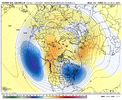
When it comes to winter storms threats, IMO (and others may feel differently), but you should not look at an individual ensemble member to validate anything at all, i.e. the Euro control. However, there is value in observing trends and run to run changes. There is value in observing how many ensemble members are showing a system vs. not (and a note here, as we have all seen, a few big members can skew the mean, so looking at the mean by itself may not be all that valuable in some instances).
Everything gets less skilled out in time, particularly the lowest-skilled solutions like individual ensemble members. Use the ENS to validate the OP and the individual members to see if there are wild or minor differences among members, which will give you an indication of how volatile the atmosphere is. Ensembles are best used to detect the level of uncertainty. Use them against themselves and against other ensemble suites for that purpose.

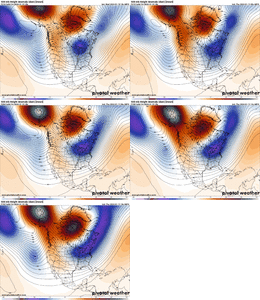
Regarding the Op vs. Control, this is from a paper on Ensembles. It says that the Op (high resolution) is better than the Control (low resolution) from days 1-5, and the Control is better than the Op from days 6-11....and both are better than the ensemble members. I suppose the high resolution presents additional issues as you go out in time
![]()
![]()
Thank you all for the time and energy to share your knowledge. This is some great information; great exhibition of what the forum is about!Hmm, I'm a little confused by this (and another comment he made about the op and control run being similar) myself. For one thing, the op and control runs were quite divergent at H5 on the 6z runs, but further this whole concept about the control replacing the deterministic is odd because I know the deterministic ECMWF is at least 9 km and has been for years and it doesn't appear to me that the control run is the same resolution. Perhaps it is just the model parameterization schemes that are set to replace the deterministic and that the deterministic will serve as the control run for the ensemble suite going forward? Not really sure.
Let’s say it’s even off by 50%…that’s still -8F for someEven though we know that will never verify. I’d be interested to see some of the analogs for that. Those are some Jan/Feb 1977 type numbers
That would be absolutely insane to average -16 for half the month of January. Unprecedented AFAIK.
Oh absolutely. 8f below average for a 30 day period in Jan/Feb in an El Niño is like money in the bank for at least 1 good snow storm.Let’s say it’s even off by 50%…that’s still -8F for some
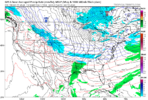
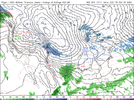
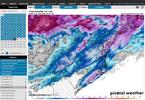
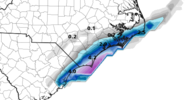
Everyone keeps saying this is the one to watch. Let’s see.Here we go again. Storm#2View attachment 141602
Jan 2018 vibes
First person to say “bomb cyclone” gets a 60 day timeoutJan 2018 vibes
Even for me at 228 that's a beautiful sight
And you have to pay extra to see it on Peacock. Bonus!Saturday night playoff game kc air temp is below zero, wind chill-20. If you like watching Millionaires freeze their butts off,tune in.