• Hello, please take a minute to check out our awesome content, contributed by the wonderful members of our community. We hope you'll add your own thoughts and opinions by making a free account!

Wintry Machine Learning Mauler 1/30-2/1

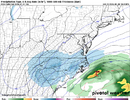
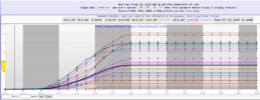
The NWS is using a NBM for totals that's running at least a cycle behind.

I’ve been watching those maps since yesterday morning and they haven’t adjusted a whole lot with the models flip flopping. Highest totals have been brought down to earth but the coverage of 4-6” totals has increased south.
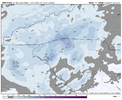
 
,
I was reading about this earlier. I don't know if true but read the HRRR struggles with dry air intruding at 700-500 mb layer. Evidently it want to collapse qpf too aggressively. I'm not sure if this happened on the latest HRRR run, as I haven't had time to look but would be interesting to see.

The 3km is my favorite CAM...HRRR is a distanced last for me. But....I can't discount it as an option...it's essentially what Brad P just put out for his call.
 
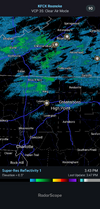
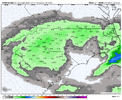
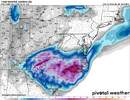
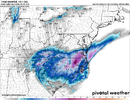
View attachment 191998Geez there's 1" hr embedded rates in the 3K.
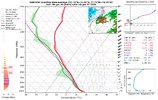
Convective banding showing up. Someone is going to get obliterated under one of these bands. Thundersnow is possible, based on some of the soundings. Upstate into the western NC Piedmont and out east under the influence of the coastal. Cool to see.
 
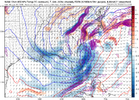
The 18z NAM has RDU in the 17-19 degree range for the heaviest snow. The Carolina Crusher was near freezing, I believe (indeed, it started as rain). This would be even better. 😎

EDIT: And the 3km NAM is ~5 degrees warmer, which seems like a bias it has based on how warm it was for last weekend's storm at the surface.
 
,


The 3km is my favorite CAM...HRRR is a distanced last for me. But....I can't discount it as an option...it's essentially what Brad P just put out for his call.
You can see on the 3km NAM the the dry slot was there, but still ended up with more than the HRRR. As many have said, this is going to be a nowcasting event and I totally expect surprises. I still like 3-6 for us.
 
From an outside perspective this sort of model disagreement does not happen when a snowstorm comes through the Northeast or Midwest. Only Southeast LOL

Yeah I think the CAMs are having some convective feedback issues with the coastal low offshore. Some of that is probably real to a degree but a lot of it arguably isn’t. Likely a big reason why the 3km and 12km NAM look so different east of Charlotte and GSO
 
Yeah I think the CAMs are having some convective feedback issues with the coastal low offshore. Some of that is probably real to a degree but a lot of it arguably isn’t. Likely a big reason why the 3km and 12km NAM look so different east of Charlotte and GSO
Is that a situation where the higher resolution becomes too much of a good thing? And so it hurts the model?
 
Yeah I think the CAMs are having some convective feedback issues with the coastal low offshore. Some of that is probably real to a degree but a lot of it arguably isn’t. Likely a big reason why the 3km and 12km NAM look so different east of Charlotte and GSO

Could it be they are picking up the 500 mb layer instead of 700 mb?


Sent from my iPhone using Tapatalk
 
Yeah I think the CAMs are having some convective feedback issues with the coastal low offshore. Some of that is probably real to a degree but a lot of it arguably isn’t. Likely a big reason why the 3km and 12km NAM look so different east of Charlotte and GSO
So do you buy the 12km more than the 3km?
 
Yeah I think the CAMs are having some convective feedback issues with the coastal low offshore. Some of that is probably real to a degree but a lot of it arguably isn’t. Likely a big reason why the 3km and 12km NAM look so different east of Charlotte and GSO
Like how the 3k likes to amp up hurricanes.
 
Yeah I think the CAMs are having some convective feedback issues with the coastal low offshore. Some of that is probably real to a degree but a lot of it arguably isn’t. Likely a big reason why the 3km and 12km NAM look so different east of Charlotte and GSO
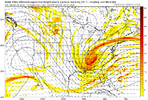
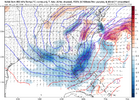
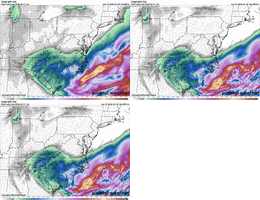
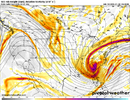
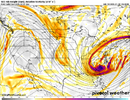
I agree. For this robust a synoptic system with a closed low and favorable lifting, I just don't buy the CAMS having such weak FGEN and WAA. Models always seem to struggle with underestimating the forcing mechanisms, and I don't see this storm being any different.
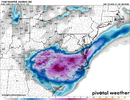
nam3km_temp_adv_fgen_850_seus_32.pngnamconus_temp_adv_fgen_850_seus_33.png

Precipitation almost always verifies further north and west, especially given such a well-defined low. I think QPF will verify on the higher side once it's said and done.
 
Is that a situation where the higher resolution becomes too much of a good thing? And so it hurts the model?

Yeah that’s a good way to think about it.

Sometimes when we’re trying to explicitly resolve convection with the high res CAMs, it can cause more harm than good. The wild swings you’re seeing run to run are part and parcel with that. Things like downstream mass subsidence and divergence/convergence, moisture blocking, how that convection changes the flow pattern ahead of the trough (pumps the ridge) etc. can get all out of whack and cause massive changes between runs over us.

In this setup, we are basically testing the limit of what kind of convective environment we can get at this time of the year over the Gulf Stream and it’s much easier for model biases to show when you push things to the limit like this.
 
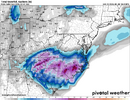
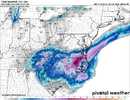
So does the MPAS. I have no idea what this model is, but it has to help give more support to the similar looking models. I have to think the hrrr and NAM’s are struggling a bit. Maybe they will come around at 0z. Still interested on the euro suite this evening to see which camp they are in.
IMG_8047.png
 
Back
Top