• Hello, please take a minute to check out our awesome content, contributed by the wonderful members of our community. We hope you'll add your own thoughts and opinions by making a free account!

Pattern January Joke

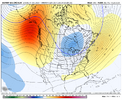
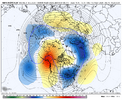
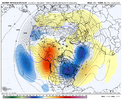
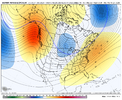
I may be off base but I remember a big GFS bias in years past was to leave those cutoff lows stranded in the eastern pacific? Could this be flaw in the operational model that’s essentially holding the pattern change hostage resulting in that big Conus death ridge and not allowing a true pattern progression? I know we have ensembles for that yada yada but just a thought
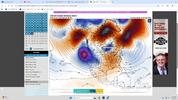
 
I may be off base but I remember a big GFS bias in years past was to leave those cutoff lows stranded in the eastern pacific? Could this be flaw in the operational model that’s essentially holding the pattern change hostage resulting in that big Conus death ridge and not allowing a true pattern progression? I know we have ensembles for that yada yada but just a thought
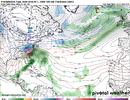
The OP GFS has been doing that all late fall and early winter. It has been retrograding lows from BC down the coast to off Southern Cal. The entire remainder of runs after that are usually off the rails. That's why it's been verifying terribly wrong in the Pac NW, it's been majorly overdoing cold there.
 
It's probably wrong but possible knowing our luck. That ridge is still kinda near the Aleutians and not poleward enough. Natural reaction downstream is a deep trough on the west coast and pumps a ridge in the east regardless of the west based NAO. But the -NAO is the more dominant feature verbatim so you'd think the low over Hudson Bay would be the more dominant low instead of the one dropped down the west coast. But lately I've learned never to underestimate the SE ability to torch. If its possible we'll figure a way to do it
 
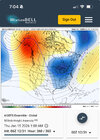
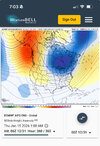
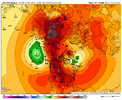
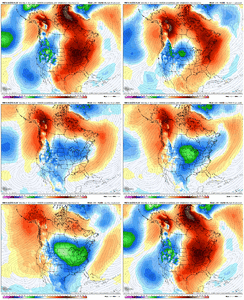
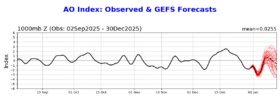
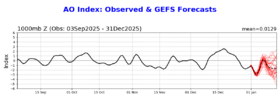
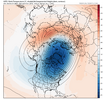
Watch out for potential major Arctic plunges week of 1/19-26: this was released on Tue 12/30.

Exclusive Weather Updates from Vaisala/X Weather & The Weather Co.

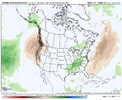
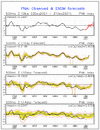
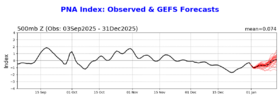
Brad Harvey, senior operational meteorologist at Vaisala, says that the forecast for the 6-to 10-day period features much-above-normal temperatures from the West to Texas. Highs are forecast to reach the 50s in Denver, 60s-70s in Dallas, and 70s in Houston. The Midwest and East are forecast to be drier than normal thanks to rounds of high pressure migrating southward from Canada. The forecast is near normal for temperatures in the Upper Midwest and below normal in the East. Risks are mixed for the Upper Midwest, where our forecast takes the middle ground between the warmer GFS and colder ECMWF solutions. Meanwhile, warmer risks in the Rockies are associated with downslope flow, while the Great Basin could be colder under high pressure. The models have lacked consistency in both the 6-to 10-day and 11-to 15-day periods. “The GFS EN projects a –PNA pattern, while ECMWF trends toward a +PNA. Neither of these solutions are given higher favorability, with our forecast featuring a round of above normal temperatures in the Eastern Half and belows emerging late in the Midwest.” For more information, go to https://www.xweather.com/weatherdesk.

Mickey Shuman, a senior meteorologist with The Weather Company, tells us that for most of next week, the Pacific pattern will reverse, helping to drive mild Pacific air into much of western and interior North America. However, a west-based -NAO block will impede the advancement of the mild air into the East. By the 11-to 15-day period, mild Pacific and maritime Atlantic air will overspread the entirety of Canada, essentially shutting down the risk of any major cold air intrusions, such that most of the CONUS moderates and ends up on the warmer side of normal, supporting a prolonged stretch of lower-than-normal GWHDDs. That being said, an emerging +PNA signal also suggests that there won’t be a major or sustainable warm-up and that some seasonably cold air attempts to expand south and east later in the period. The bigger story is the potential pattern change for the middle to end of the month, which could lead to noteworthy cold Arctic blasts over the eastern two-thirds centered on the week of the 19-26th. For more information, go to https://www.weathercompany.com/.
 
Back
Top