• Hello, please take a minute to check out our awesome content, contributed by the wonderful members of our community. We hope you'll add your own thoughts and opinions by making a free account!

Pattern January Joke

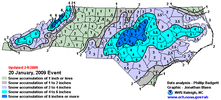
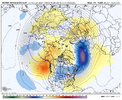
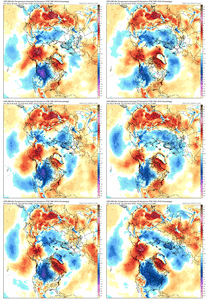
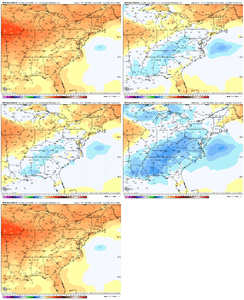
Their analogs are colder than their forecast. I think pattern analogs are best used in a general sense. Sometimes useful, and sometimes they moreso highlight extreme scenarios. They've changed their analog maps and correlations over the past year, and it looks like they are just taking analogs back to 1990. But analogs seen here are from Jan 2009, Jan 2025, and Jan 2022, all which were chilly with wintry opportunities. Possible this Jan too, but this is evolving of course and reasons it could break either way for us IMO (good or bad)

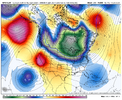
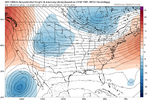
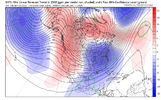
For their forecast, they used:
The official 8-14 day 500-hPa height blend consists of: 35% of Today's 0z GFS
Ensemble Mean centered on Day 11, 35% of Today's 0z European Ensemble Mean
centered on Day 11, and 30% of Today's 0z Canadian Ensemble Mean centered on
Day 11

View attachment 181011

This is great stuff man thank you
 
Their analogs are colder than their forecast. I think pattern analogs are best used in a general sense. Sometimes useful, and sometimes they moreso highlight extreme scenarios. They've changed their analog maps and correlations over the past year, and it looks like they are just taking analogs back to 1990. But analogs seen here are from Jan 2009, Jan 2025, and Jan 2022, all which were chilly with wintry opportunities. Possible this Jan too, but this is evolving of course and reasons it could break either way for us IMO (good or bad)

For their forecast, they used:
The official 8-14 day 500-hPa height blend consists of: 35% of Today's 0z GFS
Ensemble Mean centered on Day 11, 35% of Today's 0z European Ensemble Mean
centered on Day 11, and 30% of Today's 0z Canadian Ensemble Mean centered on
Day 11

View attachment 181011
That top analog date featured a mid south winter storm
 
If I remember correctly, I think that’s the storm where Eyewall got that amazing video in Sanford
I think that was from the early March 2010 storm. Let me see if I can find it. It was kinda a crappy storm in the Triad since BL temps were above freezing, we were dealing with sun angle, and soil temps were pretty warm, but where it really pounded down towards the sandhills, rates overcame all that; I think more of their rates came after sundown, as well.

EDIT: Good event summary discussing some of this...Jeremy's videos are on page 15 (assuming those are the ones you are referring to), but I can't get those links to work all these years later! :(


EDIT #2: I think he might've taken the video down based on THIS POST's link not working. Dang! That video was my favorite snow video.
 
Last edited:
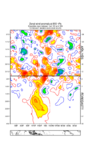
It’s really interesting to see that we have already pushed the Pacific mean state to something in between La Nina & a modoki/Central Pacific El Niño.

Notice the recurrent appearance of westerly wind anomalies over the Western Pacific (warm colors).

Unlike most Nina winters that usually end up being very mild in February, seeing this change in the base state already occurring tells me that this winter has a few tricks up its sleeves

IMG_7108.png
 
It’s really interesting to see that we have already pushed the Pacific mean state to something in between La Nina & a modoki/Central Pacific El Niño.

Notice the recurrent appearance of westerly wind anomalies over the Western Pacific (warm colors).

Unlike most Nina winters that usually end up being very mild in February, seeing this change in the base state already occurring tells me that this winter has a few tricks up its sleeves

View attachment 181016
It’s odd too seeing how the -VP signal doesn’t want to latch on to the Maritime Continent - but these go hand in hand as the low level convergence and uplift isn’t going to be located in the MC with those westerlies there
 
Fwiw, I separated winters that preceded cool ENSO (cold neutral or Nina) >> El Niño transition by “cold” and “warm” Februarys on the East Coast and looked at their OLR/convective anomalies in the Tropical Pacific

IMHO, given how much the Warm Pool has already advanced eastward, this year is leaning towards the “cold” February group with more convective activity or -OLR anomalies (cool colors) over the tropical West Pacific and tropical North Pacific, with a slightly weaker and eastward shifted area of +OLRa (decreased cloudiness, warm colors) near the International Dateline.

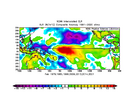
-ENSO >> + ENSO transition “warm” Februarys OLR anomalies:
IMG_7097.png

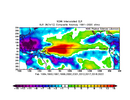
-ENSO >> + ENSO transition “cold” Februarys OLR anomalies:
IMG_7096.png

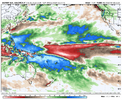
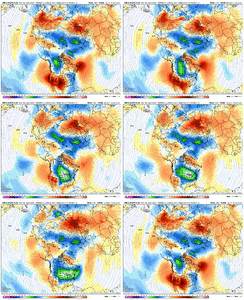
Euro weekly forecast looks more like the “cold” February composite

IMG_7109.png
 
Fwiw, I separated winters that preceded cool ENSO (cold neutral or Nina) >> El Niño transition by “cold” and “warm” Februarys on the East Coast and looked at their OLR/convective anomalies in the Tropical Pacific

IMHO, given how much the Warm Pool has already advanced eastward, this year is leaning towards the “cold” February group with more convective activity or -OLR anomalies (cool colors) over the tropical West Pacific and tropical North Pacific, with a slightly weaker and eastward shifted area of +OLRa (decreased cloudiness, warm colors) near the International Dateline.

-ENSO >> + ENSO transition “warm” Februarys OLR anomalies:
View attachment 181020

-ENSO >> + ENSO transition “cold” Februarys OLR anomalies:
View attachment 181021

Euro weekly forecast looks more like the “cold” February composite

View attachment 181022

IMHO, we have opened the door to the possibility of 2014 style Feb this year with how the low frequency state is evolving in the Pacific
 
I would take it in a heartbeat. Fun over performer at RDU, they were only calling for maybe an inch or so, but shortwave (maybe Manitoba mauler if I remember correctly) really tapped the Atlantic.
Wish I could find more documented graphics for East Tennessee. Wanna say we netted 4-6”? But airport doesn’t reflect that.
 
It’s odd too seeing how the -VP signal doesn’t want to latch on to the Maritime Continent - but these go hand in hand as the low level convergence and uplift isn’t going to be located in the MC with those westerlies there

While I have felt very confident in El Niño developing later in 2026 for months now, I was pretty unsure if we would see this base state change away from La Nina show itself in time to change the outcome of late winter.

It has certainly become apparent to me over the Holidays that it is already changing
 
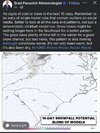
Bradley trolling hard on this fine Saturday evening View attachment 181026
At least he didn’t go off on that corny little plug he always has for “some of our best snows have been in late February and March” .

Yeah Brad. Let me unpack that for you. Any snow that late in the season melts in 5 minutes. What we really care about is the next 5-6 weeks. Spare us.
 
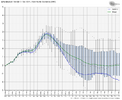
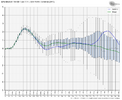
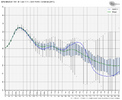
Coldest Jan 7th+ for Chicago lows on GEFS thru today’s 18Z:

1/2 12Z +25
1/3 0Z +25
6Z +21
12Z +19
18Z +15

So, the GEFS mean coldest low at Chicago on the 18Z is a whopping 10 F colder than it was just 18 hours ago and is actually now slightly colder than the 12Z EPS’ 17. The normal Chicago low is for then ~18. So, the source for potential cold in the SE has gotten sig. colder.

This colder GEFS was largely related to a stronger -WPO, -EPO, and -AO.
 
Last edited:
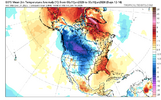
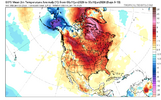
Check out how much colder the week of Jan 12-18th (week 2) has gotten on the GEFS from 0Z to 18Z run:

IMG_6714.gif

All 5 of the major indices improved for week 2. But the biggest improvement was for the WPO, which is coming just after a huge rise in it between the 0Zs of 12/31 and 1/3:

12/31 0Z WPO: strong -WPO
IMG_6718.png

Look how cold the Canadian source region was then for 1/11-15:
IMG_6719.png


1/3 0Z WPO: had risen sharply to ~neutral and was a big reason why the Canadian source region had warmed so much
IMG_6716.png

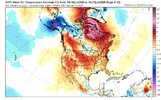
Look how much warmer Canada had gotten for 1/11-15:
IMG_6720.png

1/3 18Z WPO: big drop since 0Z
IMG_6717.png

Canada during 1/11-15 has cooled back a good bit from today’s 0Z with the WPO drop:
IMG_6721.png
 
Back
Top