• Hello, please take a minute to check out our awesome content, contributed by the wonderful members of our community. We hope you'll add your own thoughts and opinions by making a free account!

Pattern January Joke

Had a friend send me this. I’ve never heard of this meteorologist either.
Just thought it was interesting with how the pattern is set to roll.

Meteorologist Ross Ellet

10h ·

**Weather Nerd Alert: Next Week’s Warmth Is A Warning Sign From Old Man Winter**
I have seen a lot of flashy headlines in the past 24 hours on social media that are either misleading or flat out wrong. Yes, we will warm up next week. No, winter isn’t over, and I would not describe what is coming as “A January Heat Wave” either as highs will be in the 40s. In fact, if you hate winter, I would not get too excited for the coming warmth. If you understand what will drive the mild pattern, then you also understand the warmth would be temporary, and it is likely a warning sign of a big arctic blast and potential for bigger winter storms. So what is going on behind the scenes?
The pattern so far this winter has generally mimicked what we have today, below normal temperatures in the Great Lakes to the Northeast, warm out west, and extremely cold in Alaska and the Yukon. Nobody up that way wants to hear, “it is Alaska, what do you expect?”. The interior of Alaska just had their coldest December in 45 years. Fairbanks hasn’t been above 0 degrees F in nearly 3 weeks. Lows have been between -40 and -50F every day for the past week. That is not normal cold up that way. Meteorologists have been closely watching this pocket of extreme cold, because when it does start to move, it will have a big impact wherever it goes. The pattern is still locked in over the next 3 days, but after that we start to see a shift east with this entire global pattern. The warmth that is out west starts moving our way, and the trough over Alaska drops into the west.
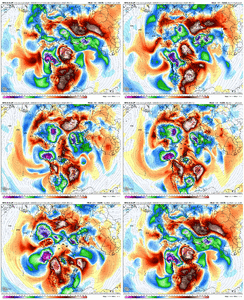
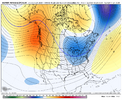
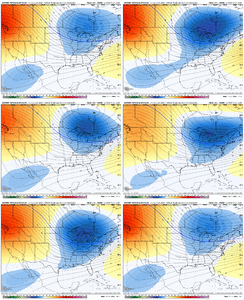
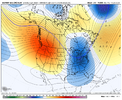
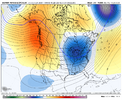
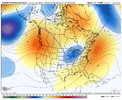
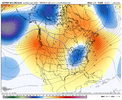
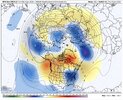
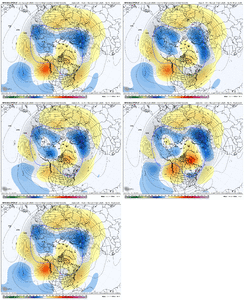
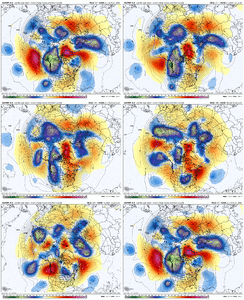
Alaska is the key to the long range forecast, and computer models move a ridge towards the state and it intensifies over the next two weeks. That would do two things. 1) It pushes the set up east. That means we get temporary warming that is in the western states, and in time that cold air in Alaska and western Canada finds a new home in the northern plains and Great Lakes, and eventually the northeast. 2) A strong ridge like what is forecast is also a blocking pattern that would stall out the weather pattern and also split the jet stream into a polar jet and a subtropic jet stream. This would increase the chance for bigger winter storms in the eastern half of the country as that pipeline of moisture would go across the Pacific, and pick up extra moisture from the Gulf. Meanwhile, the polar jet could drop into the Great Lakes bringing lots of cold. When you have this pattern, and the waves sync up, then you often get some bigger winter storms. There is no way of knowing where these storms will end up right now, but the pattern looks ideal for winter storms. At the very least, the cold looks to make a big comeback. In a nutshell, yes it will warm up next week, but be careful what you ask for as the same engine that is driving the warmth would also drive arctic cold our way after it and probably wintery precipitation mid to late January. This entire set up is connected. The screen shots below show the basic pattern as it shifts east over the next couple of weeks.

View attachment 180909

View attachment 180910

View attachment 180911


Sent from my iPhone using Tapatalk
I like his optimism for sure!
 
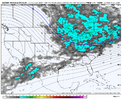
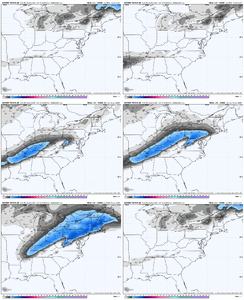
Was just looking at how the 12z Canadian Para had a taller / sharper ridge compared to the Std Canadian. Closed ridge over Idaho / Oregon / Washington is a good benchmark for a Manitoba Mauler type storm.

View attachment 180951
I was really optimistic when we started to see the jet extension about a week ago across the pacific and was hoping it would allow the ridge to build over Alaska. Its probably the lack of a coherent signal of the mjo. Something is going on lol
 
Late night tid bit from none other - Jimmy Barstool

10 days ago, no blocking over Greenland

glbz700MonInd1_2.png


now

glbz700MonInd1(12).png


and its not done shifting yet
 
ATL 15 coldest winters since 1950-1/SN

1957-8 2.7” incl IP

1960-1 0.1”

1962-3 T + major ZR

1963-4 3.6”

1965-6 0.7”

1967-8 4.2” + major ZR

1968-9 2.2”

1969-70 0.6”

1976-7 1.0” + ZR

1977-8 0.3”

1978-9 4.6” IP + major ZR

1981-2 7.7” incl. IP + ZR

1983-4 1.3”

2009-10 5.3”

2010-1 7.1”

Avg 2.8” SN/IP + ~avg ZR

2.8”/1.9” = 1.5 times the 1.9” normal

—————


Mild winters with 2”+: only 5 (~20% of them)

1951-2 3.9”

1990-1 2.1”

1991-2 5.0”

2001-2 4.6”

2017-8 4.7”


Compare that only 20% chance for 2”+ for mild winters with the 26 NN to cold winters with 2”+, which is ~50% of them.

NN and BN similar chance for 2”+


So, for ATL, having a mild winter (2+ F AN) significantly cuts down on the chance for normal SN. But NN doesn’t at all. Keep in mind that often much of ATL’s snow in a season comes from just one storm.
I remember the 60's in Atl as the coldest decade I experienced there, but dry. 67 was a good one with the ice mixed with the snow.
 
There is a non-trivial thing going on over Alaska here as the Euro is pretty well progressing the AK low / trough to the east as the western ridging builds.

Jan 3 Euro 500.gif


Meanwhile, on the GFS AI, the western ridging is moreso undercutting the AK low / trough, with the AK cold vortex (TPV) getting left behind.

Jan 3 GFS AI 500.gif


And the cold reservoir is spilling out into the Gulf of Alaska in Exxon Valdez fashion

Jan 3 GFS AI 850.gif
 
12Z Euro/GFS coldest low at Chicago 1/6-1/18: 22/30

12Z EPS/GEFS coldest low at Chicago 1/6-18: 22/25

Normal low 20-18

Not good for SE cold prospects. So, hopefully they’re going to turn out way too warm like 12/28-1/1 and earlier periods did. We’ll see. If not, it’s going to be very hard for the SE overall to get substantially cold before 1/20.

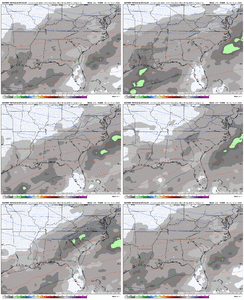
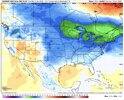
Those 90 day bias maps had Chicago too warm by 4 F for the 11-15 fwiw:
View attachment 180879

View attachment 180880

Followup:

0Z vs 12Z Chicago lowest min (F) Jan 6+:

Euro: -15 vs +22

EPS: +16 vs +22

GFS: +29 vs +30

GEFS: +25 vs +25

So, whereas Euro suite is colder, GFS suite is unchanged
 
Back
Top