• Hello, please take a minute to check out our awesome content, contributed by the wonderful members of our community. We hope you'll add your own thoughts and opinions by making a free account!

Pattern January Joke

Late night tid bit from none other - Jimmy Barstool

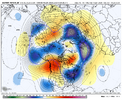
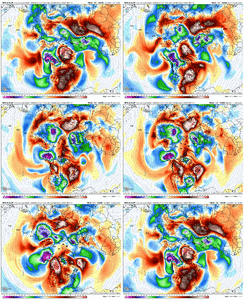
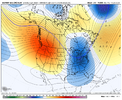
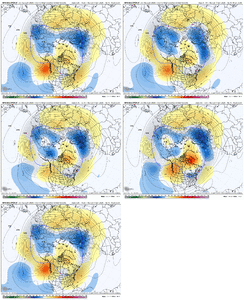
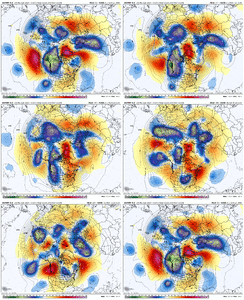
10 days ago, no blocking over Greenland

glbz700MonInd1_2.png


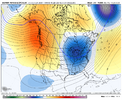
now

glbz700MonInd1(12).png


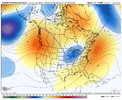
and its not done shifting yet
 
ATL 15 coldest winters since 1950-1/SN

1957-8 2.7” incl IP

1960-1 0.1”

1962-3 T + major ZR

1963-4 3.6”

1965-6 0.7”

1967-8 4.2” + major ZR

1968-9 2.2”

1969-70 0.6”

1976-7 1.0” + ZR

1977-8 0.3”

1978-9 4.6” IP + major ZR

1981-2 7.7” incl. IP + ZR

1983-4 1.3”

2009-10 5.3”

2010-1 7.1”

Avg 2.8” SN/IP + ~avg ZR

2.8”/1.9” = 1.5 times the 1.9” normal

—————


Mild winters with 2”+: only 5 (~20% of them)

1951-2 3.9”

1990-1 2.1”

1991-2 5.0”

2001-2 4.6”

2017-8 4.7”


Compare that only 20% chance for 2”+ for mild winters with the 26 NN to cold winters with 2”+, which is ~50% of them.

NN and BN similar chance for 2”+


So, for ATL, having a mild winter (2+ F AN) significantly cuts down on the chance for normal SN. But NN doesn’t at all. Keep in mind that often much of ATL’s snow in a season comes from just one storm.
I remember the 60's in Atl as the coldest decade I experienced there, but dry. 67 was a good one with the ice mixed with the snow.
 
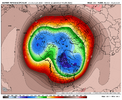
There is a non-trivial thing going on over Alaska here as the Euro is pretty well progressing the AK low / trough to the east as the western ridging builds.

Jan 3 Euro 500.gif


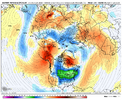
Meanwhile, on the GFS AI, the western ridging is moreso undercutting the AK low / trough, with the AK cold vortex (TPV) getting left behind.

Jan 3 GFS AI 500.gif


And the cold reservoir is spilling out into the Gulf of Alaska in Exxon Valdez fashion

Jan 3 GFS AI 850.gif
 
12Z Euro/GFS coldest low at Chicago 1/6-1/18: 22/30

12Z EPS/GEFS coldest low at Chicago 1/6-18: 22/25

Normal low 20-18

Not good for SE cold prospects. So, hopefully they’re going to turn out way too warm like 12/28-1/1 and earlier periods did. We’ll see. If not, it’s going to be very hard for the SE overall to get substantially cold before 1/20.

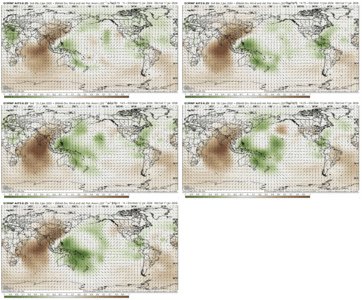
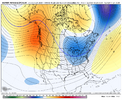
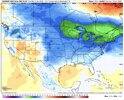
Those 90 day bias maps had Chicago too warm by 4 F for the 11-15 fwiw:
View attachment 180879

View attachment 180880

Followup:

0Z vs 12Z Chicago lowest min (F) Jan 6+:

Euro: -15 vs +22

EPS: +16 vs +22

GFS: +29 vs +30

GEFS: +25 vs +25

So, whereas Euro suite is colder, GFS suite is unchanged
 
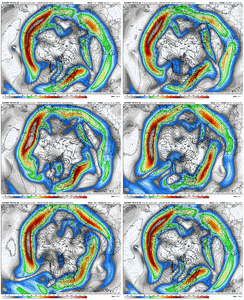
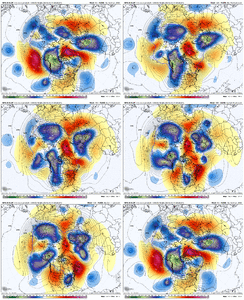
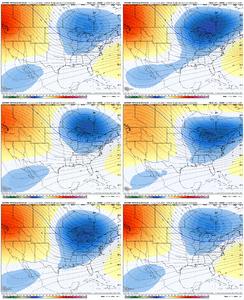
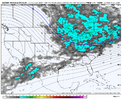
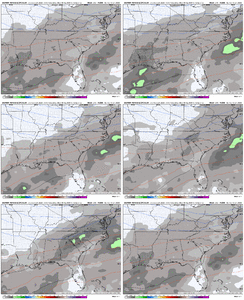
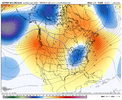
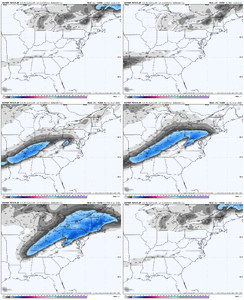
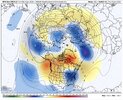
I’d keep an eye on this look as well, tall western ridge, with digging energy, vortex near the GLs, and southern stream in the picture, it smelly smells like overrunning. the AIFS mean definitely reflected it as well View attachment 180963View attachment 180964View attachment 180962View attachment 180961
Overrunning has been my biggest option even going back to the greatness we saw a week ago. Active southern jet with blocking out west and over the top to put the vortex on the US/Canadian border. What needs to be reminded to everyone is you don’t really see a legit threat from overrunning become an option until you’re well in the medium range. And that was before you got this amount of run to run volatility. Definitely something to look out for
 
Overrunning has been my biggest option even going back to the greatness we saw a week ago. Active southern jet with blocking out west and over the top to put the vortex on the US/Canadian border. What needs to be reminded to everyone is you don’t really see a legit threat from overrunning become an option until you’re well in the medium range. And that was before you got this amount of run to run volatility. Definitely something to look out for
Very true on this. I remember growing up, it always seemed like every time there was an overrunning winter precip event, you never started seeing it forecast until it was about 3 days out. I can remember a few that basically popped up inside 36-48 hours
 
Very true on this. I remember growing up, it always seemed like every time there was an overrunning winter precip event, you never started seeing it forecast until it was about 3 days out. I can remember a few that basically popped up inside 36-48 hours

Yeah the best storms last winter here were definitely last minute

None of the stuff 2 weeks out was that great. That's probably another reason I haven't been freaking out about winter being over haha
 
Followup:

0Z vs 12Z Chicago lowest min (F) Jan 6+:

Euro: -15 vs +22

EPS: +16 vs +22

GFS: +29 vs +30

GEFS: +25 vs +25

So, whereas Euro suite is colder, GFS suite is unchanged

The reason for these Chi coldest of run posts is because of it being a source region since a lot of SE cold travels from that area. It’s extremely hard for the SE to get colder than Chi (outside of mtns) as the air traveling from there modifies as it comes SE and even more w/o snowcover.

Whereas the 0Z GFS suite stayed the same (quite mild) as the 12Z despite the Euro suite getting sig. colder post Jan 6th, the 6Z GFS suite did trend a notable amount colder even though it’s still mainly mild (normal lows upper teens) (ens means are the most important that far out)

Coldest post Jan 6th of GFS/GEFS:

12Z +30/+25
0Z +29/+25
6Z +21/+21
 
ILM still talking ~.5” of rain today yet the entire precip shield is south of the forecast area and moving due east. Alrighty.
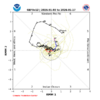
 
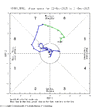
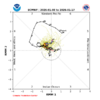
As we look ahead to Jan, here’s the wrap for Dec MJO: the last 12 days (12/20-31), which covered the torch period, turned out to track in 7-6-4-3-5, not well predicted by the models and which is typically not a cold path and can easily be mild:IMG_6707.gif

The coldest day of the month was during phase 8 and phase 8 overall was the typical cold. It never was able to get into 1 and instead took a detour across eventually to 5! Nothing even close to that had been predicted.
 
ILM still talking ~.5” of rain today yet the entire precip shield is south of the forecast area and moving due east. Alrighty.
This event did very little to help the dryness, and models are backing off on precip for the next 2 weeks. A 1986 Jan to early August repeat is very much alive. That period was extremely dry and that July was very hot.
 
Other than losing the second half of next week to a torch I don't see a ton of things available that are super red flags moving forward, even out into feb.

The base state this year (the IPWP) is much closer to 2013-14 than your standard La Nina winter, which makes Feb intriguing.

I could see us back off a bit once this N Pac ridge retrogrades into Siberia and then we come back for more -EPO early-mid February or so.
 
This event did very little to help the dryness, and models are backing off on precip for the next 2 weeks. A 1986 Jan to early August repeat is very much alive. That period was extremely dry and that July was very hot.
Big difference is that we were not coming out of a LaNina and into an El Niño in 1986
 
Back
Top