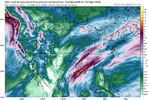
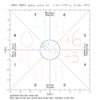
Today’s EPS and CFS have joined the GEFS in going to ph 6 mid Jan.
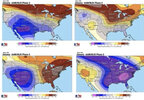
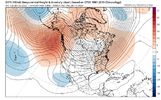
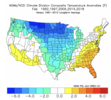
BAMwx posted that phase 6 in -AAM during Jan has been very cold in the E US, with the most intense cold in the interior SE (see lower right in image just below), which to me was very
counterintuitive. So, I needed to know the answer.
View attachment 180865
Now it’s even more important to know as the
move to ph 6 midmonth now has increasing model support. The following are results of my research done on Tue, which looked at
GSP, a station in that coldest (pink) area, during La Niña:
Niña Year….# phase 6 days…avg anomaly
1975…3…-8 M
1976…13…-9 W-S
1989…3…+8 M
1999…3…+2 M
2000…3…-4 W
2006…6…+3 S
2008…3…+8 S
2009…6…+1 W-M
2011…12…-7 W-S
2012…19…+1 W-S
2017…2…0 W
2018…3…-2 S
2021…8…-1 M-S
2022…4…-9 W
2025…2…-5 W
W weak (mainly in or near circle), M mod., S strong
91 total days (big sample)
—————
So, 15 cases of ph 6 during Nina Jans:
3 MBN
3 BN
6 NN
1 AN
2 MAN
———————
-
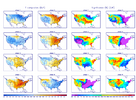
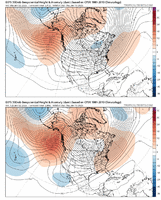
These La Nina Jan results weren’t at all what I would have expected for phase 6, one of the 3 mild Jan phases in the SE averaged out over all years:
View attachment 180866
- Though there’s not surprisingly lots of variability,
GSP did average 2 BN. Before seeing BAMwx’s post I never would have expected this. However, it should also be noted that BAM’s -6 to -7 for GSP is at the same time significantly too cold.
- Only 3 of the 15 Jan cases were AN to MAN: 1989, 2006, and 2008. These were all M to S intensity (intuitive).
- So,
none of the last 8 were mild as there were 5 NN and 3 BN (2011, 2022, and 2025). These also averaged 2 BN.
The weakest 3 averaged a solid cold 6 BN.
-
Thus if phase 6 continues to look more likely for midmonth, it will be interesting to see whether or not the NN to cold dominance works out in the SE (and E overall by association), especially if the bulk of ph 6 turns out to be anywhere from inside the circle to near/just outside the circle.










 #Grateful