• Hello, please take a minute to check out our awesome content, contributed by the wonderful members of our community. We hope you'll add your own thoughts and opinions by making a free account!

Pattern January Joke

1985 analog forget it … it was already starting snowy cold first couple days January . This will be much delayed , and doubt we see any records for cold weather . I still like last week January into early February for some winter fun for us
It was 70-+ here new years day in 1985. End of 1st week started getting back to normal
 
4b12c24df92cae8965ccc02f932e3a9c.gif

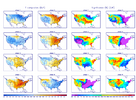
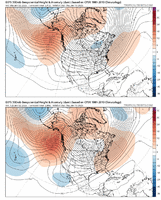
4 run 48hr trend of the GEFS around 1/14-1/15


Sent from my iPhone using Tapatalk
 
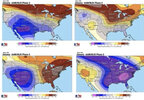
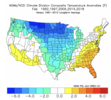
Today’s EPS and CFS have joined the GEFS in going to ph 6 mid Jan. BAMwx posted that phase 6 in -AAM during Jan has been very cold in the E US, with the most intense cold in the interior SE (see lower right in image just below), which to me was very counterintuitive. So, I needed to know the answer.
IMG_6639.jpeg

Now it’s even more important to know as the move to ph 6 midmonth now has increasing model support. The following are results of my research done on Tue, which looked at GSP, a station in that coldest (pink) area, during La Niña:


Niña Year….# phase 6 days…avg anomaly

1975…3…-8 M

1976…13…-9 W-S

1989…3…+8 M

1999…3…+2 M

2000…3…-4 W

2006…6…+3 S

2008…3…+8 S

2009…6…+1 W-M

2011…12…-7 W-S

2012…19…+1 W-S

2017…2…0 W

2018…3…-2 S

2021…8…-1 M-S

2022…4…-9 W

2025…2…-5 W

W weak (mainly in or near circle), M mod., S strong

91 total days (big sample)

—————


So, 15 cases of ph 6 during Nina Jans:

3 MBN

3 BN

6 NN

1 AN

2 MAN

———————

- These La Nina Jan results weren’t at all what I would have expected for phase 6, one of the 3 mild Jan phases in the SE averaged out over all years:
IMG_5609.png

- Though there’s not surprisingly lots of variability, GSP did average 2 BN. Before seeing BAMwx’s post I never would have expected this. However, it should also be noted that BAM’s -6 to -7 for GSP is at the same time significantly too cold.

- Only 3 of the 15 Jan cases were AN to MAN: 1989, 2006, and 2008. These were all M to S intensity (intuitive).

- So, none of the last 8 were mild as there were 5 NN and 3 BN (2011, 2022, and 2025). These also averaged 2 BN. The weakest 3 averaged a solid cold 6 BN.

- Thus if phase 6 continues to look more likely for midmonth, it will be interesting to see whether or not the NN to cold dominance works out in the SE (and E overall by association), especially if the bulk of ph 6 turns out to be anywhere from inside the circle to near/just outside the circle.

 
Today’s EPS and CFS have joined the GEFS in going to ph 6 mid Jan. BAMwx posted that phase 6 in -AAM during Jan has been very cold in the E US, with the most intense cold in the interior SE (see lower right in image just below), which to me was very counterintuitive. So, I needed to know the answer.
View attachment 180865

Now it’s even more important to know as the move to ph 6 midmonth now has increasing model support. The following are results of my research done on Tue, which looked at GSP, a station in that coldest (pink) area, during La Niña:


Niña Year….# phase 6 days…avg anomaly

1975…3…-8 M

1976…13…-9 W-S

1989…3…+8 M

1999…3…+2 M

2000…3…-4 W

2006…6…+3 S

2008…3…+8 S

2009…6…+1 W-M

2011…12…-7 W-S

2012…19…+1 W-S

2017…2…0 W

2018…3…-2 S

2021…8…-1 M-S

2022…4…-9 W

2025…2…-5 W

W weak (mainly in or near circle), M mod., S strong

91 total days (big sample)

—————


So, 15 cases of ph 6 during Nina Jans:

3 MBN

3 BN

6 NN

1 AN

2 MAN

———————

- These La Nina Jan results weren’t at all what I would have expected for phase 6, one of the 3 mild Jan phases in the SE averaged out over all years:
View attachment 180866

- Though there’s not surprisingly lots of variability, GSP did average 2 BN. Before seeing BAMwx’s post I never would have expected this. However, it should also be noted that BAM’s -6 to -7 for GSP is at the same time significantly too cold.

- Only 3 of the 15 Jan cases were AN to MAN: 1989, 2006, and 2008. These were all M to S intensity (intuitive).

- So, none of the last 8 were mild as there were 5 NN and 3 BN (2011, 2022, and 2025). These also averaged 2 BN. The weakest 3 averaged a solid cold 6 BN.

- Thus if phase 6 continues to look more likely for midmonth, it will be interesting to see whether or not the NN to cold dominance works out in the SE (and E overall by association), especially if the bulk of ph 6 turns out to be anywhere from inside the circle to near/just outside the circle.
I find it notable that most of the much below normals occured once again with weak MJO signals. I can't help but wonder, however, if within the COD, there really is any correlation regardless of the phase when within the COD?
 
I find it notable that most of the much below normals occured once again with weak MJO signals. I can't help but wonder, however, if within the COD, there really is any correlation regardless of the phase when within the COD?

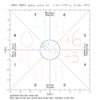
Yes, inside, near, or moderately outside the circle left side has averaged colder in Jan than near/inside the circle on the right side. This was from my original study of January, alone, done years ago fwiw as it hasn’t my been updated in many years and thus doesn’t incorporate the latest 10 or so years meaning it likely would look different with those years added. I can’t right now recall what station I used to calculate these…it may have been something like Baltimore?

Note that the -6 for weak to moderate phase 8 also includes outside the circle up to a 1.5 amp as coldest phase 8 amps averaged out were 0.5 to 1.5 IMG_3053.png
 
Last edited:
inI find it notable that most of the much below normals occured once again with weak MJO signals. I can't help but wonder, however, if within the COD, there really is any correlation regardless of the phase when within the COD?
That's a very good observation. How proportional is the relevancy of the MJO being as an impact indicator the closer to the CoD it is.
 
That's a very good observation. How proportional is the relevancy of the MJO being as an impact indicator the closer to the CoD it is.

If the MJO is nearer to the center (say <0.5 amp), the impact of the phase is small (intuitive). But if it is closer to the circle (0.5 to 1.0), it is more significant. That’s where the cold 8 inside the circle periods are concentrated vs phase 8 closer to the middle. Phase 8 cold was most concentrated in my study within 0.5 to 1.5 amp. The circle, itself, is 1.0 amp.
 
Nothing on here yet on the 12z GFS. Maybe that’s because it’s proven to be untrustworthy.
Will be interesting to see how the MJO verifies and maybe tell if there’s causation in addition to the correlation.
 
February feels like more of a toss-up this year compared to most Nina winters

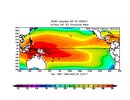
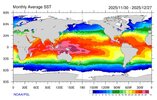
This is mainly because the Indo-Pacific Warm Pool is progressively nudging eastward as the earth system begins to slowly advance towards El Niño conditions.

We’re very likely going to see some sort of -EPO/+TNH late winter, it’s more of a question of how much SE ridging do we get with it? Pushing the Warm Pool eastward also shoves the Pacific Jet east and makes it more likely to see a +PNA & vis versa

Imho, a Feb 2014 style end to winter is totally on the table with how much we have pushed and are continuing to push the warm pool eastward here.

Also, just look at how much it has slid east over the past few months 👇

View attachment 180862
What caused 22-23 to be a mild winter and only have 1 significant cold snap early in the season?

Was it the pacific jet?
 
Probably a big winterstorm loading again after hr 360... lets hope it's right. It does have the best verification scores after all.
Is that the one that kept showing winter storms for the 4-8 timeframe? Cause that sure dust verify.
 
Back
Top