• Hello, please take a minute to check out our awesome content, contributed by the wonderful members of our community. We hope you'll add your own thoughts and opinions by making a free account!
Pattern January Joke

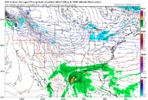
We got a fantasy storm!!
4d1624d323a95a3218fa5a308bdd3c7e.png


Sent from my iPhone using Tapatalk
 
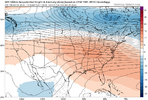
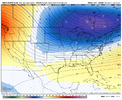
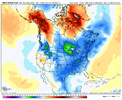
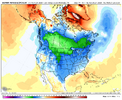
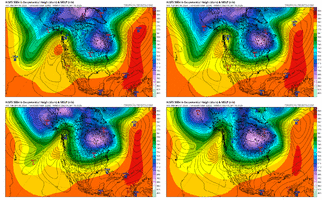
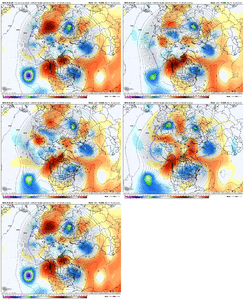
Gfs fighting as hard as it can to not dump the cold with a complete ridge bridge up top. It can’t win here.
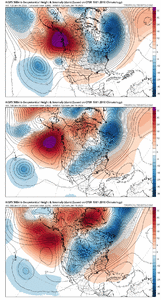
500mb is a game of angles and that evolution out west late in the run will have the beaches open early. Like Webber said, small adjustments and #NatGas makes a comeback. We alive for now
 
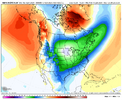
I mean I find it very impressive how locked in all model guidance is with the cold air loaded up the way it is. Ensemble & op runs working decently in tandem even in the long range. We are getting glimpses of what this pattern coming up can do with a few adjustments here or there.
 
I mean I find it very impressive how locked in all model guidance is with the cold air loaded up the way it is. Ensemble & op runs working decently in tandem even in the long range. We are getting glimpses of what this pattern coming up can do with a few adjustments here or there.

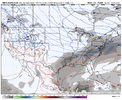
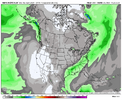
Yeah I hope this scenario hits us right square in the nose on the ensembles mid next week for an overrunning potential.


Sent from my iPhone using Tapatalk
 
I'll start getting excited about what might be a MLK day storm when the models start showing some run to run continuity. Until then, I'll just keep my fingers crossed and hope the second half of January brings some good times as far as winter weather for all of us on this board.


Ethan over here with the great vibes


What he assumes as second year La Niña since 1955 don’t all look right:

-1956-7, 1967-8, 1985-6, and 1996-7 weren’t La Niña even on RONI basis; they were all cold neutral
-that leaves 2/1972, 2/1976, 2/2009, 2/2018, and 2/2023
- But per @Webberweather53 table, I can go back further and add 2/1911 along with 2/1918

Feb: SE temps/RDU snow

1911: 1 AN/0”
1918: 3 AN/T and some ZR
1972: 5 BN/1.4” SN/IP
1976: 5 AN/T
2009: 1 AN/T
2018: 7 AN/0”
2023: 9 AN/0”

Average of these 7 Febs: 3 AN, 0.2” SN/IP

Of the 7:
-one was cold
-two were NN
-four were mild to warm

So, if we get another 2/2014, I’ll be thrilled since these analogs don’t favor it.
 
What he assumes as second year La Niña since 1955 don’t all look right:

-1956-7, 1967-8, 1985-6, and 1996-7 weren’t La Niña even on RONI basis; they were all cold neutral
-that leaves 2/1972, 2/1976, 2/2009, 2/2018, and 2/2023
- But per @Webberweather53 table, I can go back further and add 2/1911 along with 2/1918

Feb: SE temps/RDU snow

1911: 1 AN/0”
1918: 3 AN/T and some ZR
1972: 5 BN/1.4” SN/IP
1976: 5 AN/T
2009: 1 AN/T
2018: 7 AN/0”
2023: 9 AN/0”

Average of these 7 Febs: 3 AN, 0.2” SN/IP

Of the 7:
-one was cold
-two were NN
-four were mild to warm

So, if we get another 2/2014, I’ll be thrilled since these analogs don’t favor it.
I wonder how many of these La Niñas, if any, had the La Niña basically completely breakdown in January. I’m actually surprised to see that February 2009 was above normal at RDU. My recollection is that there was quite a number of cold shots that months and despite, RDU getting a trace, much of CNC got a decent little snow event in the middle of the month, then of course March started with that big ULL paste job
 
I wonder how many of these La Niñas, if any, had the La Niña basically completely breakdown in January. I’m actually surprised to see that February 2009 was above normal at RDU. My recollection is that there was quite a number of cold shots that months and despite, RDU getting a trace, much of CNC got a decent little snow event in the middle of the month, then of course March started with that big ULL paste job

1. I consider +1 NN, which is how I counted it, rather than AN even though technically it was 1 AN.

2. GSO was 0 and they did get 0.1” measured. Good memory.

3. The reason they were NN is because 2/7-14 were warm, which even out with the cold shots. Good memory again (cold shots).

Source:
 
Last edited:
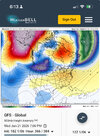
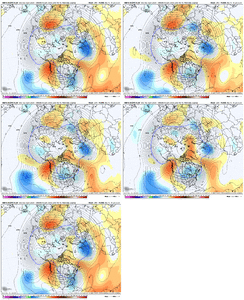
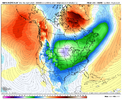
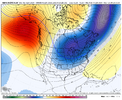
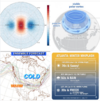
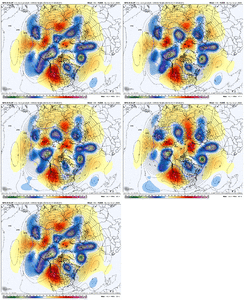
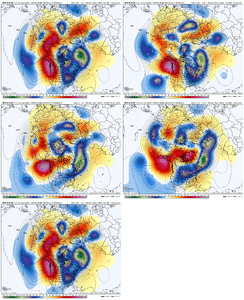
This trend is resulting in a more -AO later on, and a better tilt on the western ridge axis with it more poleward View attachment 181473
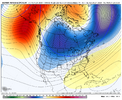
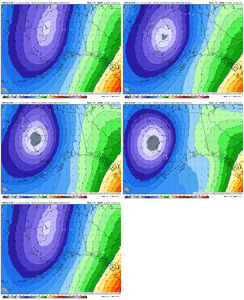
Again, take this out further in time, look at the complete flip of the +AO, to a -AO, and way more blocking in the arctic, the donut TPV getting out the way quicker gives us more of a quicker evolution IMG_1920.gif
 
Back
Top