• Hello, please take a minute to check out our awesome content, contributed by the wonderful members of our community. We hope you'll add your own thoughts and opinions by making a free account!

Jan. 17-18, 2026 SE Winter Weather Threat

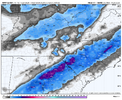
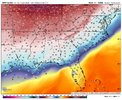
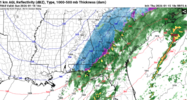
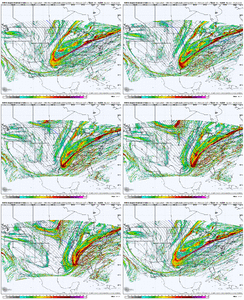
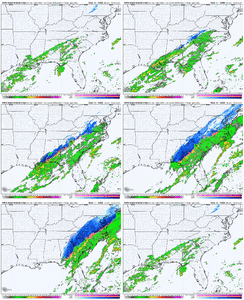
Might as well show all of them
1768780800-Lab75oJNJ44.png

1768791600-vfx3Z9E0D4M.png
 
Wow, we really may be trending towards 12/8/17. That is once again a damn good place to be sitting for a lot of us to the NW with 48-60 hours to go. Deep breathing, deep breathing.
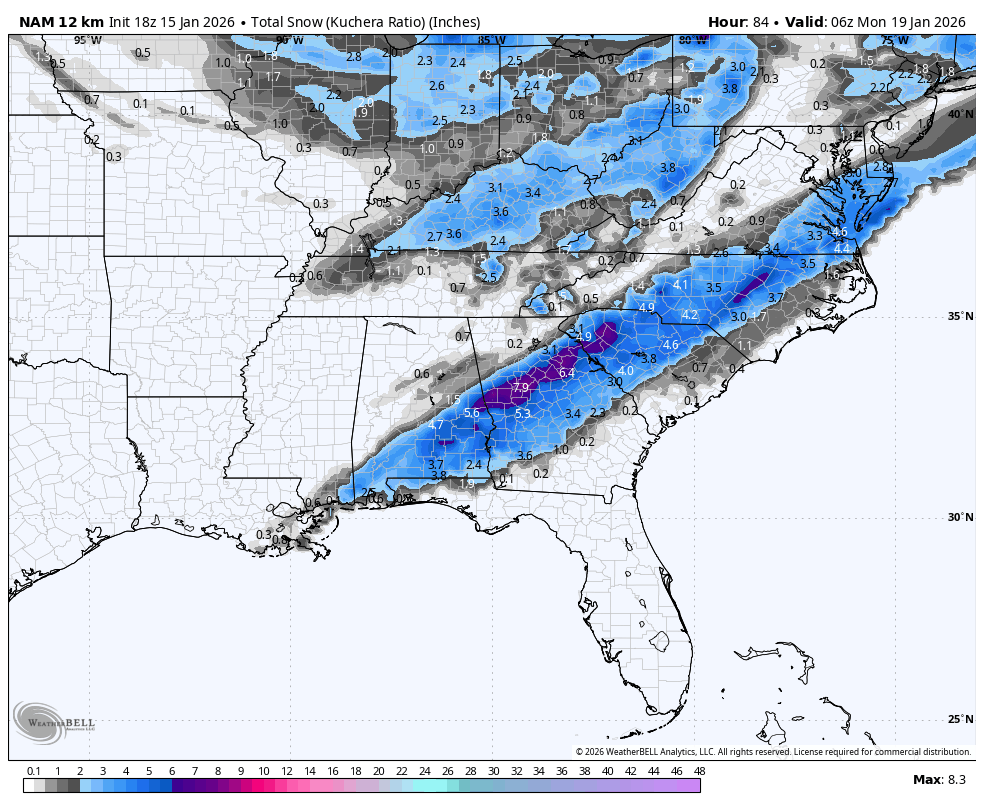
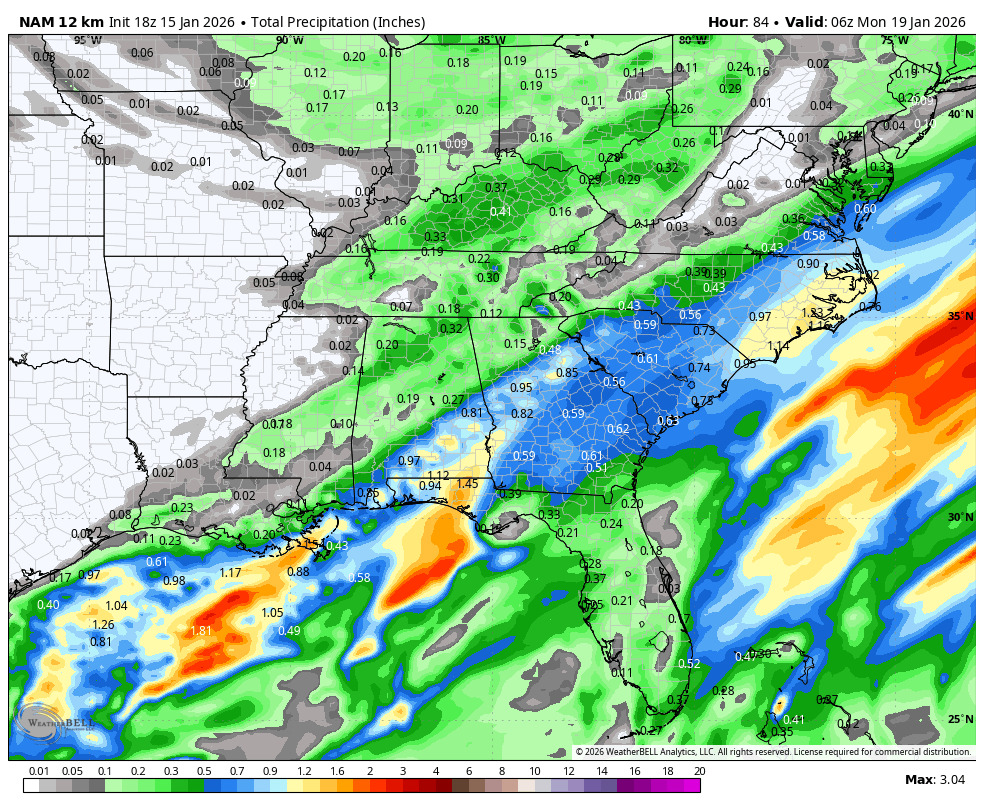
Like 12/8/17 the JMA has been steady with this same output today. The NAM says the same..hopefully theyre right! Stevo jackpots with 7"
 
How has this model preformed in past storms? Doesn’t it over estimate generally?
Some storms it can do better on than others. Usually though if it is coming up with a ridiculous run that is far from reality, it typically does it twice over the first two NAM runs that get the storm in range, and then dial back to a more reasonable estimate. We are now on run 3 of showing this, so its already intriguing at least in my opinion as potentially not fully out of the realm of possibility.
 
I might be getting it confused with 12/18, but I think the orientation of precip for 12/17 was flatter; more W to E than this is showing with a more NE orientation. That would make a big difference with both precip and temps at ground level. The more W to E flow has to come over the Apps; with a more NE flow you can get more training and lee side enhancement.
 
I bet you would. If this continues I'm going to be worrying about temps lol
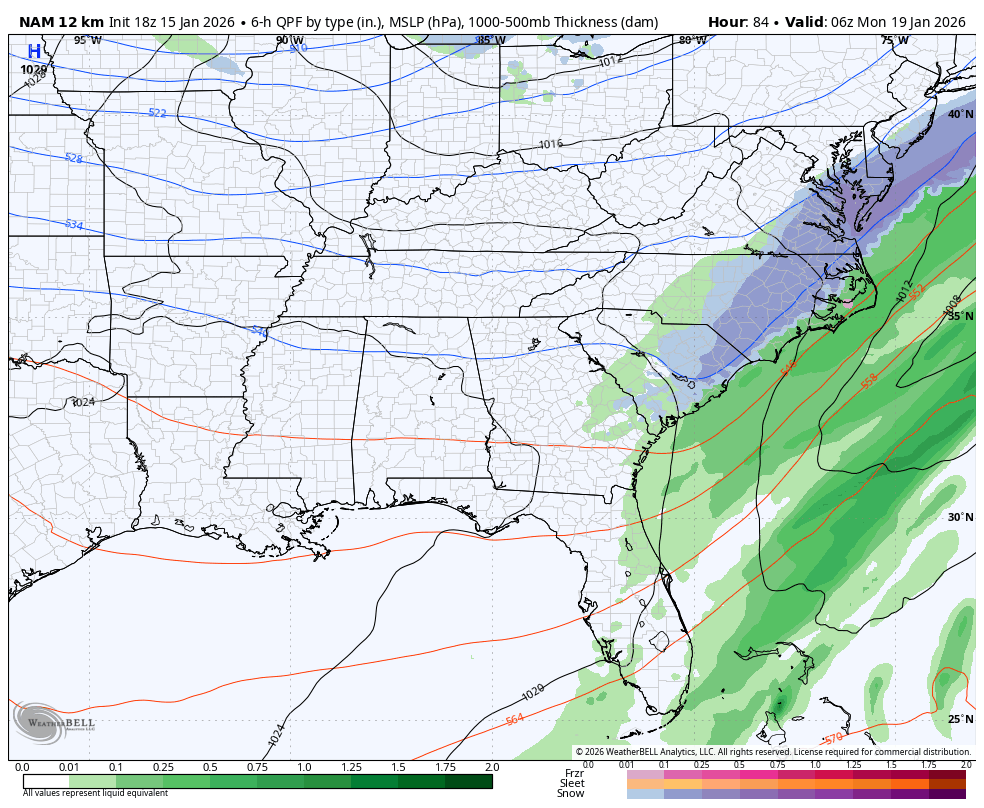
You should already be concerned about temps in NC....its going to be extremely hard in the lower levels for you guys, especially with the trend of this consolidating more and introducing more WAA/moisture.
 
I might be getting it confused with 12/18, but I think the orientation of precip for 12/17 was flatter; more W to E than this is showing with a more NE orientation. That would make a big difference with both precip and temps at ground level. The more W to E flow has to come over the Apps; with a more NE flow you can get more training and lee side enhancement.
It was. Webber or someone else here might know more about the mechanics behind that storm particularly why it seemed to train over the same areas more than what ÑAM is depicting here
 
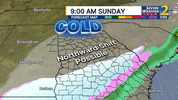
FFC:
Potential Weekend Storm System:

Well, lets get to the fun thing you probably came to read about,
the potential winter storm late Saturday through Sunday.
Unfortunately, model guidance has not really come into that much
better of agreement from what we were looking at this time
yesterday, leading to a very low confidence forecast. That is not
surprising, given the sensitivity of this type of setup, and we
will likely continue to see large model spread and run to run
inconsistency until 24-36 hours out. The quick summary of the
synoptic setup for this time period is that another shortwave
trough will be diving across the Great Plains and tracking through
the Southeast US. The exact location of the track, as well as the
speed and strength of the system will determine where winter
weather impacts (if any) would be. The latest consensus of
guidance is split up into a few camps, with the simplest summary
being some further north, and some further south. In general,
areas just along and north of the whatever the track is would see
all snow, while areas to the south of the track see rain. The
tracks that are further north would bring accumulating snow with
significant impacts from central Georgia up through the I-20 /
I-85 corridor, while the more southerly tracks keep north GA dry
and bring snow up to a line from Columbus to Macon. Getting into
forecast snowfall amounts would be too premature at this point,
but for those that appreciate probability, there is a 10-20%
chance of a quarter inch (0.25") of snowfall across the I-20 /
I-85 corridor (including Atlanta metro). Across central GA, along
and south/east of a line from Columbus to Macon, there is a 35-50%
chance of 0.25" of snow. For chances at 1" or more of snow, most
of north GA is generally at a 5-10% chance, with central GA at
15-30%. These chances may seem low, but that is due to the large
spread amongst the model guidance. To be blunt, given the dynamic
setup, impressive moisture, and cold air in place...wherever the
track ends up going, there will likely be a swath along and just
north of it that sees several inches of snow. The advice we have
for all residents of north and central Georgia, is to play it safe
and prepare as if there will be significant travel impacts on
Sunday, even if it does not materialize. Please stay tuned to
future forecast updates, and be sure to only follow trusted
sources of weather information

 
There are positive feedbacks between warm advection, precip, latent heat release, and wave tilt/amplitude that a lot of, if not most, models are going to miss in setups like these, which make them especially tricky to forecast. It’s easy for a lot of people and forecasters alike to get caught up in the models and underestimate the effect these processes and the magnitude of impact they can have on even a short range forecast.

This positive feedback loop involves warm advection and upglide aloft generating more precip and latent heating, which force -PVa ahead of our upper trough, causing the wave to slow and tilt the over more negatively/less positively. The increased wave tilt is able to advect more warm/moist air aloft over the Arctic front, which triggers more precip, etc.

When your air mass is super marginal like this and the large-scale flow is diffluent downstream (ridging off Newfoundland), you’re even more vulnerable to this positive feedback running away in a hurry and amplifying the short-term changes in the models. This is just the kind of recipe that can lead to big forecast busts, especially on the north & west side of these systems where the warm advection is weaker but also closer to the snow growth zone aloft
 
As long as the modeling of the longwave trough doesn't trend greatly away from what is progged at 48 hours (unlikely) IMO, it's not until the vorticity at the tail end of the trough in New Mexico and Colorado is fully sampled that we will truly have a solid handle on where in the SE the greatest potential of significant snowfall is likely to occur. That's the most important feature to watch going forward.

Truly a situation that can go either way right up until the last hours.
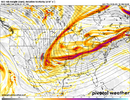
From there, I hope to be on radar and obs watch. nam-500hv-conus-2026011518-48.png
 
Back
Top