• Hello, please take a minute to check out our awesome content, contributed by the wonderful members of our community. We hope you'll add your own thoughts and opinions by making a free account!

Pattern January Joke

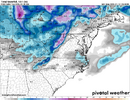
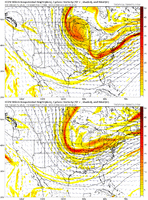
06z euro went the wrong way, dang it. Maybe the eps will look ok.
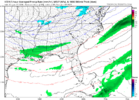
Yeah, the energy is jumping all around. I was hoping the models would start to consolidate. You can see the 0z run on the euro that jumped the energy SW and spit out a better run. That’s similar to the 6z GFS. The other two runs in the gif have no precip. As you said, let’s see if the ensembles can start marching towards that better progression. At least we are seeing some positive blips. Enough to keep us in the game.
IMG_7853.gif
 
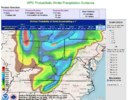
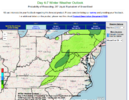
NWS GSP Official Guidance

KEY MESSAGE 2: WIDESPREAD RAINFALL AND MOUNTAIN SNOW WILL DEVELOP
ON WEDNESDAY NIGHT AND THURSDAY.

FOLLOWING A PROTRACTED PERIOD OF DRY WEATHER ON TUESDAY AND TUESDAY
NIGHT AS SURFACE HIGH PRESSURE MIGRATES OFFSHORE, THE PATTERN WILL
BECOME ACTIVE AGAIN AS A HIGH-AMPITUDE Z500 TROUGH SHARPENS UP OVER
THE MIDWEST. BY THIS POINT IN TIME, MODEL GUIDANCE IS IN DECENT
AGREEMENT THAT A BAROCLINIC ZONE WILL BE DRAPED ACROSS THE TENNESSEE
VALLEY JUST TO OUR WEST, WHILE A COASTAL FRONT WILL BE LOCATED OFF
THE ATLANTIC COAST. THE ADVANCING TROUGH WILL INCITE ACTIVATION OF
BOTH FEATURES, RESULTING IN THE ONSET OF PRECIPITATION ACROSS THE
APPALACHIANS ON WEDNESDAY AFTERNOON...CONTINUING INTO WEDNESDAY
NIGHT AS THE TROUGH PASSES OVERHEAD. THOUGH RECENT GUIDANCE HAS
WAFFLED ON THE EXACT EVOLUTION OF THE ADVANCING SURFACE WAVE, A
CONSENSUS APPEARS TO BE FORMING THAT RATHER THAN CYCLOGENESIS, WE'LL
JUST SEE A ROBUST COLD FRONTAL PASSAGE. THE RESULT, THEN, WILL BE
MAINLY NW FLOW SNOW SHOWERS ACROSS THE NC MOUNTAINS. MOISTURE
OUTSIDE THE MOUNTAINS WILL BE SEVERELY LIMITED BY THE INFLUENCE OF
THE COASTAL FRONT, SO WHILE A FEW ENSEMBLES SUPPORT THE DEVELOPMENT
OF PRECIPITATION ALONG THE I-40 CORRIDOR IN THE NC FOOTHILLS AND
PIEDMONT, ACCUMS SHOULD BE LIGHT TO NONEXISTENT, AND IT'S UNCERTAIN
WHETHER TEMPERATURES WILL EVEN BE COLD ENOUGH FOR ANY FLAKES. THE
FORECAST WILL NEED TO BE MONITORED FOR POTENTIAL WINTER WEATHER
ADVISORIES ACROSS THE MOUNTAINS AS WE GET CLOSER TO THIS EVENT.

THE TROUGH SHOULD EVOLVE INTO A CLOSED UPPER LOW OVER THE NORTHERN
MID-ATLANTIC BY THURSDAY MORNING, AND IN RESPONSE, THE BULK OF
DETERMINISTIC MODELS AND LONG-RANGE ENSEMBLES STILL DEPICT
CYCLOGENESIS ALONG THE COASTAL FRONT. HOWEVER, THE THINKING HAS NOT
CHANGED THAT THIS FEATURE WILL BE FAR ENOUGH EAST TO PRECLUDE ANY
NOTABLE IMPACTS FOR OUR AREA. RATHER, PRECIPITATION SHOULD TAPER
OFF SMOOTHLY THROUGH THE DAY THURSDAY AS THE FRONT PUSHES EAST OF
US, UNTIL WE'RE MOSTLY DRY AGAIN BY THURSDAY EVENING APART FROM SOME
LINGERING NW FLOW SNOW
 
Cheer up guys. It should bring a bit of excitement knowing how "not locked in" our second timeframe is. Just a ridiculous amount of energy around this weekend. The first timeframe brings cold air in place for the following rounds of energy to tap into. 00z Euro was awesome despite what the 06z Euro did.
 
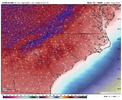
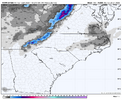
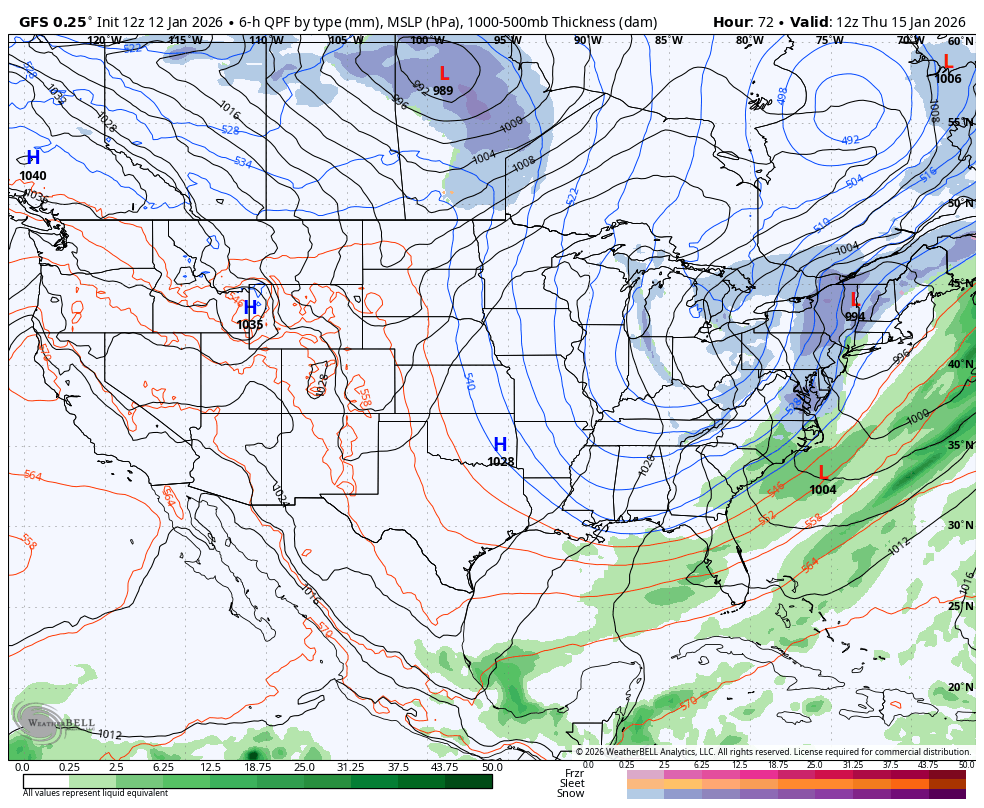
To much of a bad thing might be a good thing? View attachment 182647View attachment 182646
I was about to say. It looks like the precip is further back west, actually along the coast compared to the last several runs, and despite there being less consolidation of the energy the cold still appears to be there. It’s nothing out of the ordinary for precip to back west and northwest a couple hundred miles over 72-84 hours.
 
I was about to say. It looks like the precip is further back west, actually along the coast compared to the last several runs, and despite there being less consolidation of the energy the cold still appears to be there. It’s nothing out of the ordinary for precip to back west and northwest a couple hundred miles over 72-84 hours.
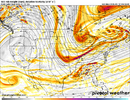
It looks like the southern shortwave/vort is digging further SW. It’s almost becoming its own deal.
 
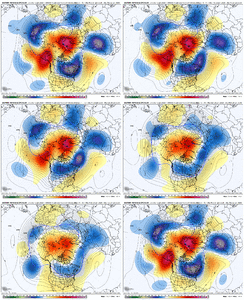
It would be a mistake to over-rely on one forecast parameter to compile a longer term prediction. This year, the Madden-Julian Oscillation and Sudden Stratospheric Warming measures have constantly been used to the point of excess, with poor results. The MJO is poorly predicted by the standard baroclinic weather models, while SSW depictions are usually wrong and wildly misinterpreted. I have noticed that tropical forcing outlooks pop up often, and almost always tied to the Wheeler Diagram plots using some of the schemes like the ECMWF and GFS. The oscillation is best portrayed by viewing on satellite imagery and not wind anomaly plots, which undergo alterations usually every 12 hours or so. The favored phases for winter weather in much of the lower 48 states is Phases 6, 7,8, and sometimes 1. This is provided that the convective forcing is strong and attached to both the polar westerlies and subtropical jet stream. If, as is currently the case, the impulse body is weaker and most noticeable below the Equator, cold intrusions will be transient with about 2 or 3 days of impact. The 10MB events will channel results to the baroclinic zone in two to four weeks after occurrence, usually a reflection in 500MB features with respect to ridges, blocking signatures, and closed lows and vortices. Use of other indices is unwise; those are meant for "after the fact" evaluation, and it makes much more sense to evaluate items like the NAO and WPO after all is said and done. In climatology and classification. Not as a dodge to having to plot items like 500MB ridges and trough, mountain torque, vorticity maxima, and complex frontal structures that can actually tell you how the weather will turn out in your specific community.

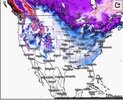
All of those ideas aside, we need to piece together how the last ten days of January will turn out. The deep but transient trough coming through North America this week, along with the storm complex off of Baja California, are probably the most likely indicators for apparent weather in the lower 48 states. There is a wide scope of snow and ice from the northern tier of the USA across the North Pole and covering a wide area of Eurasia. Set-ups like these usually breed one or two massive Arctic intrusions east of the Rocky Mountains, and an all-encompassing cold wave below the Canadian Border cannot be ruled out. If the Madden-Julian Oscillation resumes a hook-up with the southern branch, it is almost inevitable that a very large scale storm will track along the southern and eastern rims of the USA. Using the numerical models (flawed of course, but we have many more schemes to look at these days), many seem to have a warm West vs. cold East alignment, with Manitoba and Ontario being the source region for cold and energy. I like the idea of a cAk vortex setting up near James Bay, which almost always creates deep freeze events. The La Nina episode is still moderate. But all of the guidance so far says a steady climb in SST values will bring the ENSO signature into a neutral stance next month, with a slow ascent of the subtropical jet stream, which can only mean more precipitation, with storms targeting a Texas to Georgia to NC Outer Banks path.

But first, some doses of mild air to deal with in the central and southern parts of the U.S. Then the winter reminders will return!


Prepared by Meteorologist LARRY COSGROVE on
Sunday, January 11, 2026 at 3:10 P.M. CT
 
I dont think that would bring snow if that trended NW.

Because you need the ULL to link up
Not really you can even see by the contours that plenty of cold air is still there. If anyone doubts how much something like this can change this close in, I’ll remind you of the 1/21-22/2022 storm that pretty all models had nothing west of the immediate coast 36-48 hours before the storm came in.
 
Last edited:
Not really you can even see by the contours that plenty of cold air is still there. If anyone doubts how much something like this can change this close in, I’ll remind you of the 1/24-25/2022 storm that pretty all models had nothing west of the immediate coast 36-48 hours before the storm came in.
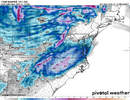
The snow last year had sc/nc dry that same timeframe 36hrs out and then we all saw snow.
 
Not really you can even see by the contours that plenty of cold air is still there. If anyone doubts how much something like this can change this close in, I’ll remind you of the 1/24-25/2022 storm that pretty all models had nothing west of the immediate coast 36-48 hours before the storm came in.
I got basically nothing with that 😃
 
All winter long, we've watched time and time again models correct eastern troughs westward. Can we continue betting this streak? Hope so!

System #1 seems DOA outside of a small chance in N. Carolina and Virginia. With the trend of models bundling more vorticity in the base, and less interaction with that lobe spun off of the Se Canada TPV. chances of light precip are there, but temps are a little too warm absent enough rates for dynamical cooling.

System #2 would appear to benefit greatly, all things being equal, the further south and west the base of this trough goes. Let's reel this one in!
 
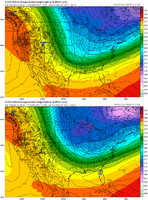
Big picture, the pattern this week unfortunately just has the trough/ridge too far east. It's been discussed, but in my opinion we want northern stream energy coming into the conus "down the stove pipe" of Idaho, digging south to TX, starting to tilt around the MS to give us a nice healthy storm. We're getting energy come in around the lakes, and Minnesota. That generally just leaves no time for proper spin up and won't work I don't think for the SE. No time for those vorts to dig and tilt to bring a storm. That's why everything is dry.

MA and NE is a different story and they may have some fun. Time is ticking, maybe the following week we'll get another chance. This week look nice and cold though so just a shame wasting this, swing and a miss.
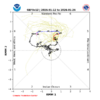
 
Big picture, the pattern this week unfortunately just has the trough/ridge too far east. It's been discussed, but in my opinion we want northern stream energy coming into the conus "down the stove pipe" of Idaho, digging south to TX, starting to tilt around the MS to give us a nice healthy storm. We're getting energy come in around the lakes, and Minnesota. That generally just leaves no time for proper spin up and won't work I don't think for the SE. No time for those vorts to dig and tilt to bring a storm. That's why everything is dry.

MA and NE is a different story and they may have some fun. Time is ticking, maybe the following week we'll get another chance. This week look nice and cold though so just a shame wasting this, swing and a miss.
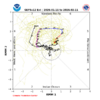
That has been the theme any time its been cold the past few years. Trough is too far east, western ridge is too far east.
 
Not surprisingly, today’s GEFS mean prog has reduced the max amp of the phase 6-7 from the ~2.7 of two days ago to now being close to the Euro’s ~2.1 today (see below). But it retains the 17 day record breaking long winter phase 6.

Also, note that today’s GEFS turns it left as it approaches phase 8:
IMG_6965.png

Yesterday’s ext GEFS didn’t turn as much:
IMG_6968.png

This change should be respected based on the stats for the # of DJF MJO days by phase since 2011 showing that phases 6/7 were the two most frequent phases day by day and that phase 8’s days numbered only ~1/3 of that of phase 7, which is likely due to the strong W Pac warm pool (where phase 7 resides):

DJF:

1: 76

2: 96

3: 167

4: 173

5: 212

6: 249

7: 286

8: 95


Whether or not the MJO actually goes into phase 8 late this month and then proceed to 1-2-3 in the first half of Feb will probably play a big role as regards the chance for the +PNA to come right back (if it were to actually go back to a -PNA for ~a week just prior) and the resultant resumption of a cold E US as we look toward the 1st half of Feb. If it ends up not going into phase 8 in a meaningful way, the last 2 Euro Weeklies runs showing a mainly mild Feb would seem to have a better chance to verify. Let’s hope not for those who want it cold.
 
Back
Top