• Hello, please take a minute to check out our awesome content, contributed by the wonderful members of our community. We hope you'll add your own thoughts and opinions by making a free account!

Pattern January Joke

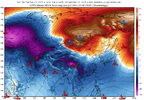
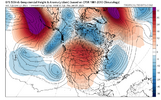
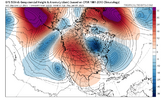
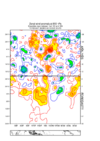
The extended GEFS does have a bias towards Pacific & Western Hemisphere convection, but it is interesting nonetheless that it tries to completely nuke La Niña later in January. The Euro weeklies aren't quite as bullish yet but also show rather persistent westerly/+U anomalies over the Pacific thru mid January or so
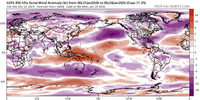
gfs-ens_u850aMean_global_31.png

ps2png-worker-commands-7899bdc75-rr6fs-6fe5cac1a363ec1525f54343b6cc9fd8-0jzbhjn_.png


We don't need to go full boar El Niño (& we won't obviously), but if we nudge the ENSO state just enough to put us somewhere between La Niña & say a modoki El Niño, that completely changes the game for late winter.

I.e. we could go from a prototypical -PNA/+TNH late winter Nina pattern to more of a +PNA/+TNH type look if we push the Warm Pool eastward enough. Only need a subtle change to the low frequency state & Pacific Jet to make that happen, but these are polar opposites in terms of sensible impacts especially in the SE US.
 
This is the one thing I have never understood. Care to elaborate more? Or maybe share me a publication of some kind?
Positive East Asian Mountain torque should cause the jet stream to extend and put a sock in the Aleutian ridge that brought on the -PNA.

This tweet but backwards:
 
This is the one thing I have never understood. Care to elaborate more? Or maybe share me a publication of some kind?
High pressure in east Asia. We’ve had low pressure/-EAMT has been working against the +AAM deposition in the background causing the what feels like a semi permanent Aleutian ridge given the 2 are working against each other creating that stationary wave pattern, but now a +EAMT is showing up, which is a extender to the pacific jet, which could move the Aleutian ridge up on out of there since it’ll finally be working together with the background/tropics
 
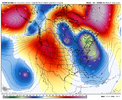
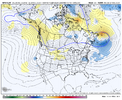
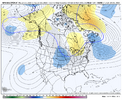
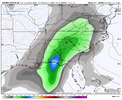
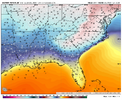
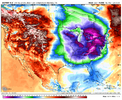
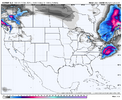
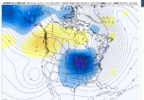
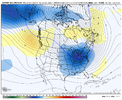
The GFS has lost the follow-on cold shot on this run with the CONUS ridge flatter and further east. Hopefully just long-range noise since the AIGFS still has it.
1766507715232.png
1766507747413.png
 
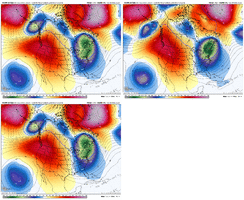
Quite a few good adjustments with the H5, that’s a complex blocky pattern to say the least.


Sent from my iPhone using Tapatalk

All it takes is one wave to slam on the brakes, then everything else slows down behind it in a positive feedback loop, in much of the same way traffic behaves during rush hour.

All it takes is one dummy on the road to get overly brake happy, and then everyone behind them slams on the brakes and starts rubber necking. Same thing is happening here with the first trough slowing/digging more, which backs up everything behind it and feeds back onto the -NAO
 
All it takes is one wave to slam on the brakes, then everything else slows down behind it in a positive feedback loop, in much of the same way traffic behaves during rush hour.

All it takes is one dummy on the road to get overly brake happy, and then everyone behind them slams on the brakes and starts rubber necking behind em. Same thing is happening here with the first trough slowing/digging more, which backs up everything behind it and feeds back onto the -NAO

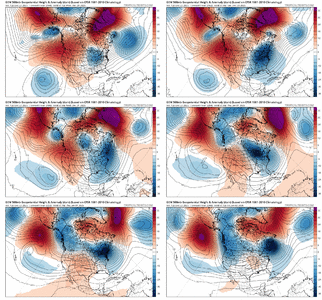
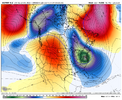
Eric, off the top of your head…are there any analog storms that would come close to what the GEFS is suggesting at H5?


Sent from my iPhone using Tapatalk
 
If we can get enough energy to dig into the NE we can keep feeding that block. We need 2-3 consecutive wave breaks and we might be cooking. Cant really afford to miss or our block sort of peters out. Prob our best shot to shake the pattern up. Wasn’t the greatest 12z run there but happy hour might bring that look back
 
Eric, off the top of your head…are there any analog storms that would come close to what the GEFS is suggesting at H5?


Sent from my iPhone using Tapatalk

The only 2 storms I can find between 1948-2021 w/ -NAO/-WPO/+EPO/-SCAND are minor ones from Jan 1956 & another from Feb 1985.
 
Back
Top