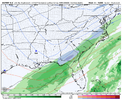
That's pathetic for a under 3+ day ensemble mean.
I'm tempted to call it, but who knows, if an ensemble mean this close in can change so quickly, perhaps, just maybe, it goes the other way over the next few cycles.

That's pathetic for a under 3+ day ensemble mean.

That's pathetic for a under 3+ day ensemble mean.
I'm tempted to call it, but who knows, if an ensemble mean this close in can change so quickly, perhaps, just maybe, it goes the other way over the next few cycles.


A little bit in a deadzone right now and this happens quite often. Shorter range slightly too far to be accurate but globals too close to be accurate.Posting the globals, and giving them credence, at 84 hours is, well, diabolical. This is CLASSIC global mischief, losing a storm in mid-range, only to play catchup to the short range models in a day or so. Love it!

What model would you like to look at at 84 hours? The NAM? The RGEM? The HRRR?Posting the globals, and giving them credence, at 84 hours is, well, diabolical. This is CLASSIC global mischief, losing a storm in mid-range, only to play catchup to the short range models in a day or so. Love it!


Sorry, but we are not in their wheelhouse at this range. Usually, 36-48 hours out is around the time you would put more credence in the short-range models. That's just been my experience.I would lean heavily on short range models at this range, If they are picking up on something they would likely be right at this range than anything the Globals are showing

But we're also out of the wheelhouse at this range for Globals, I'm putting my chips on the short range even at 72-84Sorry, but we are not in their wheelhouse at this range. Usually, 36-48 hours out is around the time you would put more credence in the short-range models. That's just been my experience.

Hate to break it to y'all, but statistically, models smoothly improve inverse with lead-time. The GFS (or any other model) doesn't suddenly become poor at a shorter lead-time.Sorry, but we are not in their wheelhouse at this range. Usually, 36-48 hours out is around the time you would put more credence in the short-range models. That's just been my experience.


That’s the thing. The model runs that were winners on the western flank had some wave separation between the Saturday system running thru TN and our trailing wave diving down…and they really dug that trailing wave back to the southwest. But the separation allowed time for cold air to filter east and more room for the wave to breath and sharpen for the precipIf the wave speeds up like the GEFS and GFS show at 18z, great you have an eastward shift in precip, and more of your precip occurs in the morning hours in NC so that’s nice. Oth, you might be outrunning your Arctic front and cold air even more. Just so hard to win with this

I'd trust the globals over the 84 hr NAM.Posting the globals, and giving them credence, at 84 hours is, well, diabolical. This is CLASSIC global mischief, losing a storm in mid-range, only to play catchup to the short range models in a day or so. Love it!

Yes. This is why I got 4” of snow back in January 2022 when the GFS had 20.I'd trust the globals over the 84 hr NAM.
Also, the global models will be more accurate at go-time than they are days before the event. Maybe not as good as the mesoscale models (although that's debatable, the HRRR is a disaster sometimes in my perception), but there seems to be a mistaken perception on here sometimes that the globals get worse closer to the event when in reality they'll never be more accurate right before an event.
The point is that, on average, the GFS is going to be more accurate with a 24-hour lead time from an event compared to a 48-hour lead time, which is going to be more accurate than a 72-hour lead time, etc. The globals don't become "less accurate" in the run-up to an event, which is the impression I sometimes get from this forum. In any given specific situation, your mileage may vary.Yes. This is why I got 4” of snow back in January 2022 when the GFS had 20.

I don’t remember exactly but 12/8/17 and 2/8/2020 - GFS didn’t do particularly well <84 hours, it was something the NAM did better on? Idk could be forgetting things at this pointHate to break it to y'all, but statistically, models smoothly improve inverse with lead-time. The GFS (or any other model) doesn't suddenly become poor at a shorter lead-time.


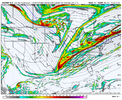

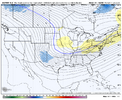
It's a small adjustment and not much to look at, produces some spotty very light snow in ENCWhen you have availability will you share pictures of it I don’t have access thanks
Sent from my iPhone using Tapatalk
The NAM surface is typically dry so this doesn’t applyTo the newbs, never trust the surface precip on the NAM. It's sexy but will disappoint you (almost) every time
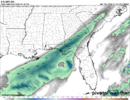
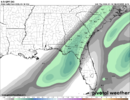
Any NW trend that existed in models earlier today has completely stopped and even reversed in much of the guidance.

not wrong but you have to keep it close enough because model error drops off exponentially from here on.Actually happens quite often in storms. Northwest trend always appears 1 or 2 days before
Sent from my iPhone using Tapatalk
Yeah. It looks like to me that we now have every model in the same ballpark. Now we start seeing tomorrow how much things trend NW, if any the last 48 hours. I will say the 18z NAM did give a little pause with how moist it was simply because, it typical runs dry at that range.Actually happens quite often in storms. Northwest trend always appears 1 or 2 days before
Sent from my iPhone using Tapatalk
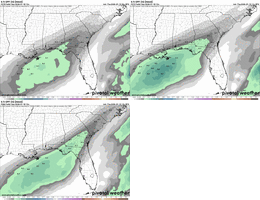
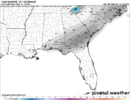
looks like more of an orientation shift than anythingOuch. 18z EPS is SE with the precip
View attachment 183966