Shaggy
Member
Wilmington highlighting winds gusting 45-50 without storms.



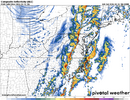
Why would this be good news? If you are a weather nerd like myself give me the worst. Whatever nature has let’s see it. We aren’t in here for sunny days and clear skies.Looks like the end of the most recent HRRR keeps the majority of the discrete activity relatively close to the coast and eastern sections of the region, which would be good news for the western areas that could still see a nasty QLCS, but with the threat a little lower from a lack of instability during the late night and morning. However, the 48 hour HRRR should always be taken with a grain of salt; hopefully the other 18z guidance is coming in like this. View attachment 195021

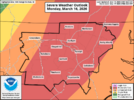
This is something to keep an eye on. I would not be surprised to see a moderate risk for some areas from the SPC in tomorrow's forecast for Monday. This could be the first widespread severe weather outbreak for folks in Virginia and the Carolinas in 2026.Severe Weather Threat is looking more and more likely on Sunday afternoon in Mississippi and Sunday night in Alabama and Georgia and then Monday South Carolina and North Carolina will need to be weather aware!
Sent from my iPhone using Tapatalk
I am the same way, but I try to inject empathy into my desire for severe weather because I know most people don't want it, and I don't want to see terrible damage from it, knowing how destructive it can be to regular people. Best case scenario is tornadoes over forests and open fields, but it doesn't always play out like that.Why would this be good news? If you are a weather nerd like myself give me the worst. Whatever nature has let’s see it. We aren’t in here for sunny days and clear skies.

Why would this be good news? If you are a weather nerd like myself give me the worst. Whatever nature has let’s see it. We aren’t in here for sunny days and clear skies.
Yeah, it sure is. It is 2-3 hours slower and now brings 1300 CAPE here to Jonesville instead of 500. It looks especially nasty from the northeast upstate up through central NC. The area from Charlotte up to the Triad may just be ground zero for this. We also now have a small threat for some of us tomorrow afternoon too.Hrrr is nasty


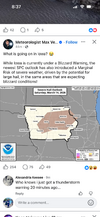

Yea, we’re going to end up wasting away another SVR season. AL ex has gotten extremely boring over the last few years.Woo-hoo another crappy, nighttime QLCS...

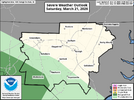

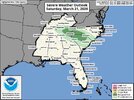

Dude look at a calendar and see when he posted lolYou do realize that that was last weekend, right?
Sent from my iPhone using Tapatalk
Dude look at a calendar and see when he posted lol
meh OFB/front is going to outrun the best forcing. Maybe a small corridor in VA could be upgraded where the initial convection forms but once the OFB shoots south that'll quickly choke off severe prospectsWouldn't be surprised to see an upgrade to marginal for parts of nc and va on Friday. Sneaky hail/wind look
Ain’t no sweat buddyHey man I’m sorry I missed when you posted it I do apologize
Sent from my iPhone using Tapatalk
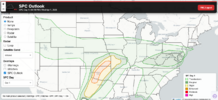
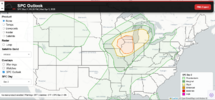
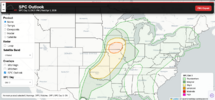

Maybe just maybe

Setup has leaned a little not messy but still a week out finer details aren't that relevant when the overall look says yes

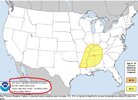
It pins that vortex in the lakes in the exact right spot so that every wave turns the corner and gets a good return flow out front. If nothing else that's a massive rain setupMmmm, last night's EuroAI is definitely waking up our severe season with several looks after nine days.
Some of them textbook for causing big problems over the SE.
Sucks this is lined up to be on 4/27DAY 7 FROM SPC
View attachment 195583
Yeah breaking down the models on the day 7 threat alone , the ingredients alone are mind boggling say the leastMmmm, last night's EuroAI is definitely waking up our severe season with several looks after nine days.
Some of them textbook for causing big problems over the SE.