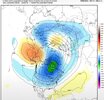
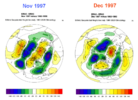
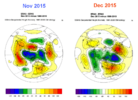
The Year Without Winter. Important the IOD was in Posotive suposedly back then. Currently it is in Neutral territory and forecasted to evolve into posotive phase by spring.
AI Overview
The "Year Without a Winter" refers primarily to the
1877–1878 winter in North America, an extraordinarily mild season marked by the
1877–1878 El Niño event. [
1]
Key Details of 1877–1878
- Impact in the Upper Midwest: Documented heavily across Minnesota, Iowa, and the Dakotas (via historical reports archived by the Minnesota Department of Natural Resources), the winter featured temperatures roughly 10°F to 12°F above average. [1, 2, 3]
- Unseasonal Conditions: Farmers plowed fields into December, spring-like flowers bloomed around Christmas, lakes and rivers stayed largely free of ice, and there was a severe lack of snow for sleighing or logging. [1, 2]
- Global Consequences: Compounded by a strong Indian Ocean Dipole and regional climate shifts, the same period triggered catastrophic droughts and famines across India (Great Famine of 1876–1878), China, and Brazil (Grande Seca), resulting in tens of millions of deaths. [1]
Thanks for posting this showing how extraordinarily mild it was in 1877-8 in the N US, especially in the upper Midwest. However, for those who don’t know since this AI is focused up N (including Mack territory) and isn’t addressing the SE, I feel it’s important to point out these things about the SE that winter:
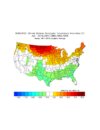
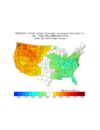
DJF actually averaged NN in the SE overall with
-
a few degrees warmer than normal in Dec, the warmest month, although Dec 1-3 of 1877 had well below normal cold per Asheville’s records:
1877-12-01 33 14 23.5
-20.5 41 0 0.00
1877-12-02 37 20 28.5
-15.3 36 0 0.00
1877-12-03 44 19 31.5
-12.1 33 0 0.00
-
Jan actually averaged slightly colder than normal in the SE. At AVL there were two 4” snowstorms:
Here’s the very cold early Jan of 1878 at AVL, including 4” of snow on the 4th and the strongest of the cold Jan 6-7th, which was during a 3 day period that didn’t get above 32:
1878-01-01 43 29 36.0 -3.1 29 0 0.00 M
1878-01-02 44 29 36.5 -2.5 28 0 0.00 M
1878-01-03 37 23 30.0 -8.9 35 0 0.00 M
1878-01-04 38 20 29.0 -9.9 36 0 0.40 4.0
1878-01-05 30 12 21.0 -17.8 44 0 0.00 M
1878-01-06 30 8 19.0 -19.7 46 0 0.00 M
1878-01-07 30 7 18.5 -20.1 46 0 0.00 M
1878-01-08 36 12 24.0 -14.6 41 0 0.00 M
Then there was another potent Arctic shot near mid-month leading to a low of 12 at AVL:
1878-01-12 49
12 30.5 -7.9 34 0 0.00
Next at AVL there was another day that didn’t get above 32 followed by a 2nd significant snow, 4.5”, at the end of Jan:
1878-01-30 32 23 27.5 -11.9 37 0 0.00 M
1878-01-31 42 30 36.0 -3.6 29 0 0.87
4.5
-
Feb like Jan also averaged slightly colder than normal in the SE with plenty of cold although no extreme cold shots
-Here’s what I feel is a very notable stat for
AVL: the warmest between Jan and Feb was only 58. That is THE coldest warmest of JF on record! The next coldest warmest of JF was 1905’s 60, another El Nino (moderate).
-The warmest for DJF at AVL was only 65. Only two had a colder warmest and that was only barely colder at 64! These were not surprisingly both during strong El Niños: 1930-1 and 1986-7.
——————————
AVL data is at this link:












 ️ deep
  ️
️