• Hello, please take a minute to check out our awesome content, contributed by the wonderful members of our community. We hope you'll add your own thoughts and opinions by making a free account!

Wintry January 23rd-27th 2026

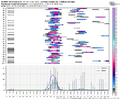
I'm very confident that the GEM has a cold bias, and that Atlanta and most of GA will only be seeing a cool rain from this storm, per the Euro. 925mb is over 5 degrees for most places with surface temps in the 40s and 50s.
Way too far out to say this 'very confidently' imo
 
I'm very confident that the GEM has a cold bias, and that Atlanta and most of GA will only be seeing a cool rain from this storm, per the Euro. 925mb is over 5 degrees for most places with surface temps in the 40s and 50s.
IMG_6620.png

🤨
 
I think nobody can definitely say anything until we watch the trends, the potential is there for an historic winter storm, p-types to be determined. I don’t think it’s a guarantee that this trends north an we’re stuck with a massive ice storm especially NW of I-85 in NC
 
When forecasting the major winter storm that occurred on February 19-20, 2025, all major operationals had a storm that went up the coast at some point (notably the Euro, which went down spectacularly with its ship). However, the only model not to do that was the Euro AI, consistently showing a more southern slider solution from D8 inwards, which ended up verifying very well.
 
I think nobody can definitely say anything until we watch the trends, the potential is there for an historic winter storm, p-types to be determined. I don’t think it’s a guarantee that this trends north an we’re stuck with a massive ice storm especially NW of I-85 in NC
most of the bottom-quartile storms in the ensemble envelopes would still be the most impactful southeastern winter storm of the 2020s if they verified verbatim. even a relative bust is huge.
 
This is a pretty remarkable thing by NWP standards tbh. I know AIFS was firing warning shots (and WxNext may have been too, I wasn't paying close attention), but for every major physics OP to go from no storm to major winter storm unanimously in the same cycle is nuts.

AI has been pretty incredible to be honest. May not get exact specifics dialed in but the general idea gets nailed down fairly quickly in the medium (6-8 day) range a step ahead of the physics based modeling.
 
Just going out on a limb here at this lead. I’d say those along and north and west of 85 is a very snow look to me. Along and south looks like a big opportunity for a huge sleet storm. Like 2-6” worth. Probably 20 miles north of I20 and further south had the opportunity for a big ice storm.
 
Euro ai can not claim victory on this one no matter what. Woof.

View attachment 185295
one thing i find interesting with the ai models is that they don't trend... they jump. trends in the physics models manifest in moderate nudges with every suite. ai models take a quantum jump and lock in like a pitbull clamping down on a burglar. bouncycorn you got any takes on this?
 
Just going out on a limb here at this lead. I’d say those along and north and west of 85 is a very snow look to me. Along and south looks like a big opportunity for a huge sleet storm. Like 2-6” worth. Probably 20 miles north of I20 and further south had the opportunity for a big ice storm.
Well hopefully everything trends away from anyone seeing that kind of Ice Storm. But as far as us upstate folks I think it definitely would take much tweaks to be all Snow up this way
 
We have the pattern. We have the ingredients. Just gotta get the details right with the timing of the TPV movement & associated surface high, and the southern stream wave

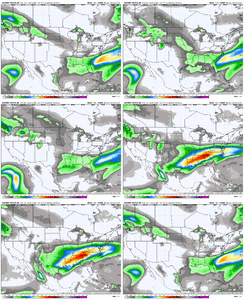
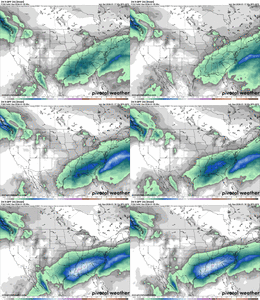
This is a tremendous look precipitation-wise here on the 18z Euro as northern stream shortwave phases in and kicks out the Baja wave into long fetch SW flow streaming across the southern half of the conus. Would like to see more cold air work in ahead of this of course

View attachment 185280

That Kicker is piece #1. Be on shore in less than 96 hrs. Baja piece 1-A. Hp #2. It will show up. Question is if its 1039 or 150 but position,banana HP, is high confidence at H5. Least im worried about. Piece 1 an 1-A and their timing hold the keys to the puzzle.
 
one thing i find interesting with the ai models is that they don't trend... they jump. trends in the physics models manifest in moderate nudges with every suite. ai models take a quantum jump and lock in like a pitbull clamping down on a burglar. bouncycorn you got any takes on this?
Model error comes from two things: 1) architectural errors in the rollout itself (ie filling in the gaps of what is occurring in the simulation) and 2) initial conditions errors. Conventional models suffer from errors from both.. both of which compound over the forecast rollout.

AI models are far superior to traditional models at simulating the atmosphere.. meaning most error is entirely due to errors in initial conditions.

If there is a substantial error in the initial conditions pertaining to a system, once that error is resolved, it will adjust and settle on the solution that is most likely.

Conventional models have much more run-to-run change because conventional physics-based parameterization (ie filling in the gaps of the atmosphere and microprocesses happening in it) is inferior to AIs handling of the forecast rollout.

Foundationally "why" is this the case? Nobody seems to know.
 
idk. the digging around baja is what transformed this into a qpf nuke on this particular model. need longer sample size
This digging trend though is concerning for the southern regions that might see ice though, given its digging more, its bringing in a lot more WAA, and also giving more time for the high pressure to be out ahead of the shortwave and wedge areas east of the apps
 
Seems like it would be really hard for models to trend stronger with the SE ridge here. You have a perfectly placed block with a polar vortex trapped directly in between it and the southern Atlantic coast. If anything, I’m shocked there can be as much ridging as what’s being shown?

Doesn’t this usually trend towards less ridging, when you have the the players lined up like this?
 
Seems like it would be really hard for models to trend stronger with the SE ridge here. You have a perfectly placed block with a polar vortex trapped directly in between it and the southern Atlantic coast. If anything, I’m shocked there can be as much ridging as what’s being shown?

Doesn’t this usually trend towards less ridging, when you have the the players lined up like this?
This year, models have persistently tried to park the SE ridge and slowly eroded it away in the 120 to 216hr timeframe.
 
Back
Top